Togo: 2025 revised budget, a £39.4 billion increase for social welfare and security
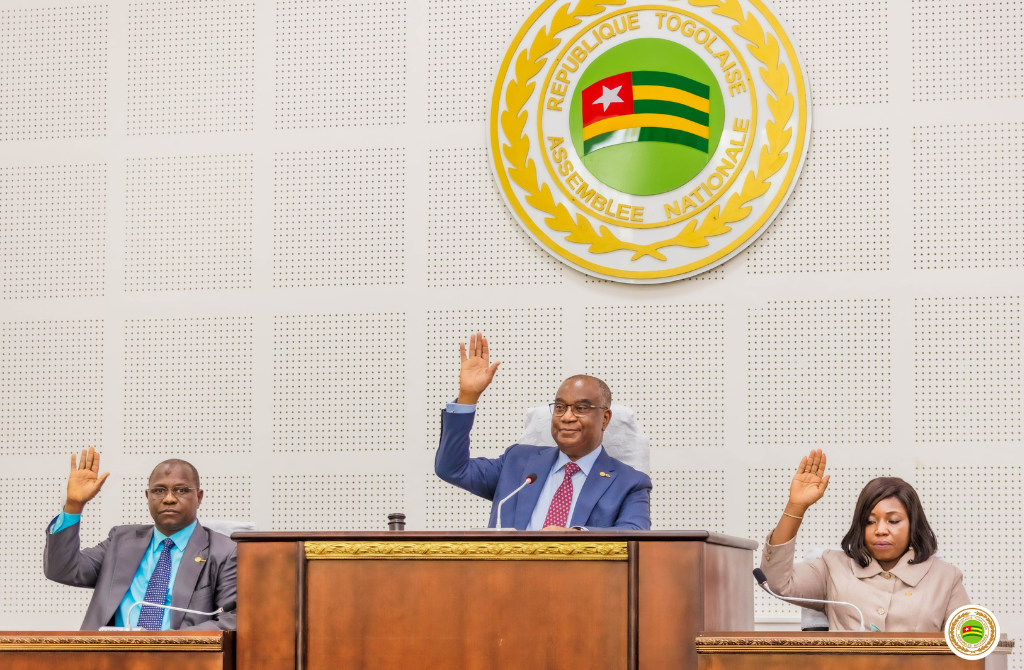
On Monday, December 22, the Togolese National Assembly in Lomé adopted the supplementary finance bill for the year 2025. This adjusted budget, presented by the government in response to evolving economic and security conditions, has been set at 2,436 billion CFA francs in both revenue and expenditure. This represents an increase of 39.4 billion compared to the initial allocation of 2,396.6 billion previously approved.
This adjustment, referred to as a “supplementary budget,” is justified by the need to update state financial forecasts within an environment marked by persistent regional and international uncertainties and tensions.
According to the explanatory memorandum, the revision pursues three main objectives: to optimize budget execution by reducing unspent credits, to address new and urgent needs particularly in the security sector and to strictly comply with the provisions of the organic law relating to finance laws.
A detailed examination of the allocated credits reveals a reinforcement of the social orientation of public finances.
Social expenditures now represent 50.8% of the total budget, with an allocation of 679.8 billion CFA francs, compared to 49.6% in the initial finance law.
This increase confirms the stated commitment of the authorities to place human investment and the protection of citizens at the heart of government action.
This budget approach, focused on priority sectors, aligns with a strategic continuity.
Indeed, the draft budget for the 2026 fiscal year, already approved by parliament, maintains this strong social dimension by allocating nearly 48% of expenditures to key areas such as education, health, access to drinking water, energy, and social protection. This budgetary trajectory illustrates a multi-year financial planning strategy aimed at cushioning economic shocks while preserving long-term development programs.
The adoption of this supplementary budget comes at a time when security and social stability requirements heavily influence public resource allocation choices.
It reflects a pragmatic adjustment to address immediate imperatives without deviating from the government’s roadmap, which remains centered on social progress and strengthening national resilience in the face of crises.
Kodjovi Makafui