Burkina Faso / Food self-sufficiency: Pragmatism, determination and realism in the service of national ambitions
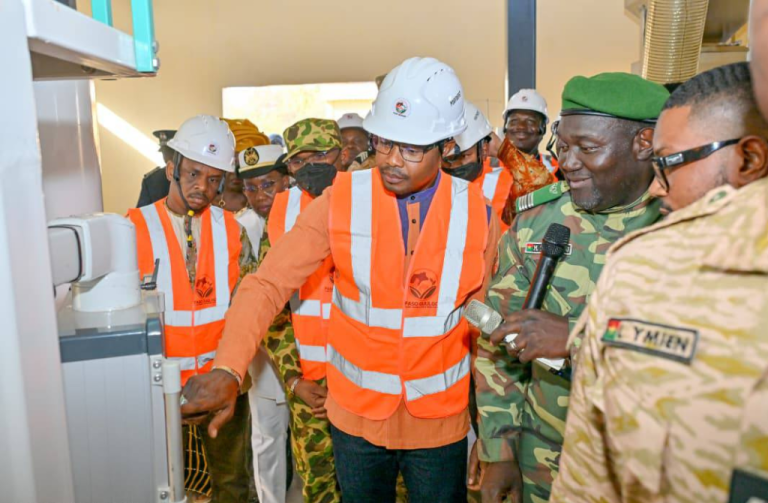
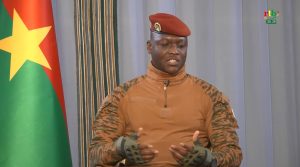
The path to food self-sufficiency is often paved with proclaimed ambitions and statements of intent. But in Burkina Faso, under the leadership of Captain Ibrahim Traoré, the Government appears to have chosen to swap mere speeches for concrete actions. This Friday, March 13, 2026, in Bobo-Dioulasso, Prime Minister Rimtalba Jean Emmanuel Ouédraogo laid a decisive milestone in this quest for sovereignty by inaugurating industrial units for the production of fish feed.
Beyond the simple ceremony, what was being expressed was proof of a clear-eyed pragmatism in the management of public affairs.
The stated objective of the Agro-pastoral and Fisheries Offensive is clear and ambitious: to increase national fish production to 100,000 tonnes.
To achieve this, the authorities did not succumb to the ease of superficial solutions.
The development of fish farming through the installation of floating cages in the country’s water bodies was a necessary first step.
However, the government had the intellectual courage to face reality: without local inputs, this well-oiled machinery risked stalling.
The bottleneck had been identified: dependence on expensive and often unavailable imported feed was hampering the growth of fish farmers. This is where pragmatism prevailed over haste.
Rather than simply encouraging production without securing the means to achieve it, the state made significant investments to fill this void.
The inauguration of these industrial units in Bobo-Dioulasso is the culmination of this lucid analysis.
Now, by locally producing quality feed tailored to the needs of the fish, Burkina Faso is not merely increasing its catch volumes.
It is structuring an entire sector, creating added value on its own soil, and reducing its import bill.
This is what realism in development looks like: understanding that a chain is only as strong as its weakest link, and concentrating efforts to strengthen it.
By acting in this way, President Traoré and his government prove that determination alone is not enough unless it is guided by a clear vision of the obstacles.
By tackling the root of the problem the availability of inputs they are providing those in the sector with the tools needed to achieve the 100,000-tonne target.
This is not a wishful thinking cast to the wind, but a strategy built stone by stone, industrial unit by industrial unit, to make Burkina Faso a true actor in its fisheries sovereignty.
Maurice K.ZONGO