Mali: Youth integration, 3,500 beneficiaries expected by 2026 thanks to an ambitious training programme

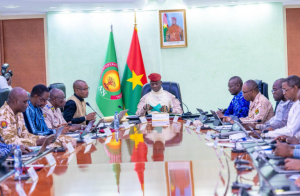
Facing a labor market where the informal sector employs over 98% of young workers, the Malian government is accelerating its vocational training strategy to offer concrete prospects for its youth. During the second session of the Steering Committee for the MLI/805 project, held on February 26 in Bamako, the Minister of National Entrepreneurship, Employment, and Vocational Training, Oumou Sall Seck, unveiled the state’s ambitions for 2026.
The main announcement is unequivocal: 3,500 young people will undergo a comprehensive training and professional integration program this year.
This initiative follows a project launched in 2025, backed by significant funding of 2.5 billion CFA francs (approximately $4.4 million), with support from technical partners such as the European Union and LuxDev, in collaboration with the Regional Councils of Kayes, Koulikoro, and Sikasso.
The program for 2026 includes specific operational objectives: the development of ten new training programs, capacity building for 300 trainers, the placement of 1,750 young people in internships, and targeted support for 20 micro, small, and medium-sized enterprises.
See also/ Mali: World Bank reaffirms commitment to education and the future
The stated ambition is to eventually reach 6,000 beneficiaries, making this project a true instrument for sustainable integration, based on tangible results and transparent governance.
This governmental push responds to a pressing social reality. According to data from the National Institute of Statistics (INSTAT), the economic landscape of Mali remains dominated by the informal sector, significantly limiting young people’s access to stable and adequately paid jobs.
While the official unemployment rate for 15-24 year-olds stood at 3.98% in 2024 according to the ILO and the World Bank, this figure does not reflect the extent of underemployment nor the situation of so-called NEET youth (not in employment, education, or training).
In this context, vocational training appears as a strategic lever to bridge the gap between available skills and the real needs of employers. The enthusiasm of young people for these programs, moreover, remains strong: in 2025, the 14th cohort of the internship program run by the Agency for the Promotion of Youth Employment (APEJ) recorded more than 15,000 applications for only 2,500 places, demonstrating a massive social demand.
By intensifying its efforts and structuring a training offer aligned with economic realities, the Malian government aims to transform the country’s demographic potential into a driver of development, offering its youth future prospects outside the informal sector.
Neil Camara