DRC: Washington sanctions the Rwandan army and reshuffles the diplomatic deck in the Great Lakes region
The American administration has announced targeted sanctions against the Rwanda Defence Force and four of its senior officials, including Chief of Staff Vincent Nyakarundi. The decision, taken by the Office of Foreign Assets Control of the Department of the Treasury, results in the freezing of assets under U.S. jurisdiction and prohibits any transactions with the designated entities or individuals.
Washington accuses these officials of providing operational support to the March 23 Movement, active in the eastern part of the Democratic Republic of the Congo.
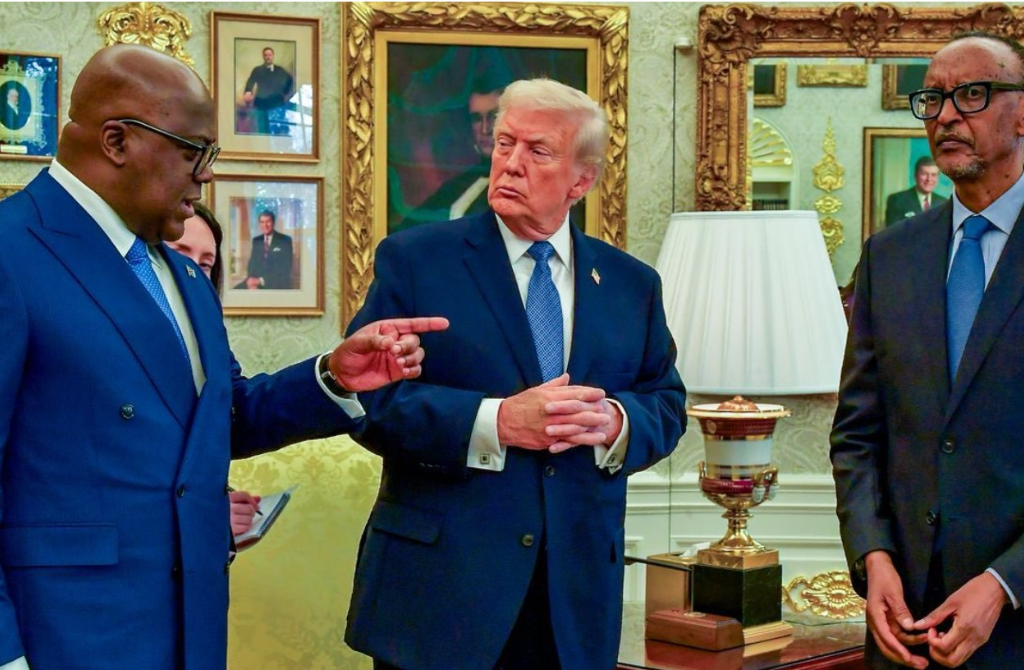
This measure comes within a specific diplomatic context. On December 4, 2025, in Washington, a joint declaration for peace and prosperity was signed by Donald Trump, Félix Tshisekedi, and Paul Kagame.
U.S. authorities believe that the M23’s advances on the ground violate the commitments made within this framework.
The armed group is already under U.S. and UN sanctions for atrocities committed against civilians.
In Kinshasa, the government welcomed a decision it interprets as explicit support for the sovereignty and territorial integrity of the DRC.
Congolese authorities see it as confirmation of international support in their strategy to restore state authority in the East, particularly in North Kivu and South Kivu.
Kigali, for its part, contests these sanctions, deeming them unilateral and based on a biased interpretation of the conflict.
Rwanda claims that the DRC has not honoured its commitments to neutralize the Democratic Forces for the Liberation of Rwanda, which it considers a direct threat to its security.
From an analytical standpoint, this decision marks a shift in level. The United States is no longer limiting itself to sanctioning non-state actors but is targeting the military hierarchy of a partner country.
This choice increases diplomatic pressure on Kigali and reshapes regional power dynamics.
For the DRC, the stakes are twofold. In the short term, the decision can help isolate external supporters of the M23 and hinder its operational capacity.
In the medium term, a lasting reduction in insecurity in the East is a prerequisite for economic recovery, securing mining investments, and stabilizing public finances.
The real impact of the sanctions will depend, however, on their effective implementation and the ability of regional actors to translate diplomatic pressure into concrete de-escalation on the ground.