Burkina Faso: The state confronts clandestine networks, with customs on the front line

In states facing the simultaneous trials of insecurity and economic fragility, the border becomes a vital, almost organic space for the survival of development. It concentrates vulnerabilities, but also the driving forces for resurgence. In Burkina Faso, the seizure of more than 1.6 billion CFA francs worth of dangerous products by customs, following the “Folokoto” operation, reveals less a circumstantial performance than an assumed political direction. That of a State that chooses to no longer endure trafficking, but to dismantle it.
Cyanide disguised in clinker, 92,688 liters of counterfeit oils bearing TotalEnergies and Shell branding, over a million Tapentadol tablets hidden in biscuit shipments, explosives, narcotics, smuggled sugar.
The ingenuity of criminal networks reveals a structured underground economy, capable of exploiting the slightest weakness. It measures, by implication, the scale of the challenge facing the Burkinabe administration.
In this context, the refusal by customs agents of a bribe offer of 100 million CFA francs constitutes a turning point.
This is not a simple administrative anecdote. It is a political act in the full sense of the term.
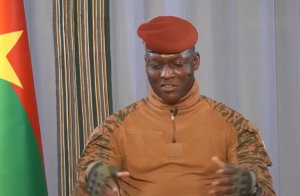
It marks the transition from a discourse of expectation to a culture of responsibility. Under the impetus of Captain Ibrahim Traoré, the progressive popular revolution finds here a concrete, visible, measurable embodiment.
The fight against fraud goes beyond the sole question of public revenue. It involves the health of citizens, security stability, and institutional credibility.
By intercepting products unfit for consumption and high-risk substances, customs defends the national market against unfair competition and protects the formal economy.
Each seized shipment is a signal sent to honest economic actors, but also to the networks that thrive on opacity.
This methodical work is part of a broader movement of state consolidation. A State that imposes rules restores the authority of the law. A State that controls its commercial flows creates the conditions for more autonomous development.
From a pan-African perspective, this administrative rigor fits into a continental dynamic of reclaiming strategic levers, the sine qua non condition for effective sovereignty.
Operation “Folokoto” should be understood as a milestone. That of an administration that is recovering, an executive that sets a clear direction, a country that refuses the normalization of the parallel economy.
Sovereignty is not proclaimed from platforms; it is built through daily rigor. And it is by this discipline that the solidity of the Burkinabe State is now measured.
Maurice K.ZONGO