Burkina Faso: The government is mobilizing 14.6 billion CFA francs for an emergency plan to guarantee drinking water for the population
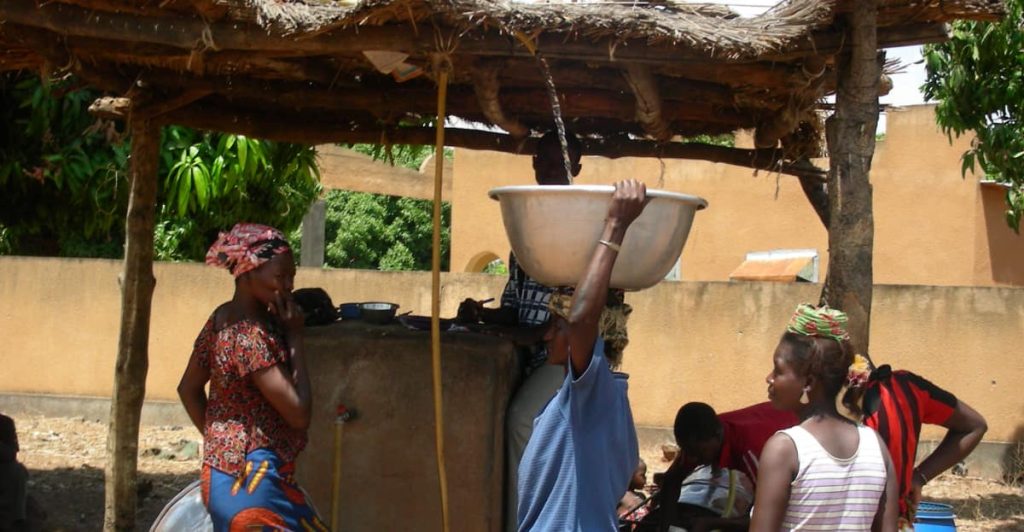
Faced with recurrent and prolonged drinking water cuts affecting daily life, the government of Burkina Faso has accelerated action. The Minister of State for Agriculture, Water, Animal and Fisheries Resources unveiled an ambitious emergency plan during the Council of Ministers, aimed at structurally resolving the water deficit at the National Water and Sanitation Office (ONEA). With 14.6 billion FCFA in funding already secured, this strong state commitment demonstrates determination to act quickly and relieve the population.
The urgency is justified by revealing figures. While ONEA the effective drinking water production of ONEA reaches 390,410 m³ per day, a considerable portion 122,180 m³ is lost daily in the distribution network.
Consequently, the volume actually available to consumers drops to 268,230 m³ per day.
Read also/ Burkina Faso: IMF confirms solid growth of 5% and negative inflation in 2025
This 31.3% loss rate far exceeds international standards, typically between 15% and 20%, representing a significant shortfall for users.
To reverse this trend and “improve living conditions,” the emergency plan focuses on three complementary strategic axes: optimizing existing production, drastically reducing water losses in the distribution network, and urgently increasing production capacity.
The stated objective is to generate an additional 180,000 m³ of water daily, significantly boosting supply for households and economic activities.
The financing of the plan sends a strong signal from authorities. It relies on internal resource mobilization without waiting for hypothetical external support.
The effort is shared through restructuring the water ministry’s budget by 3.6 billion FCFA, contributions from water agencies (Nakambé and Liptako) totaling 3.5 billion FCFA, and ONEA’s own resources contributing 7.5 billion FCFA.
By securing these funds while targeting both production and leak reduction, the state demonstrates determination to transform public water service.
This emergency plan represents a concrete response to citizens’ daily difficulties and sustainable investment in a vital sector.
Maurice K.ZONGO