Mali/USA: A Diplomatic shift at the heart of the Sahel
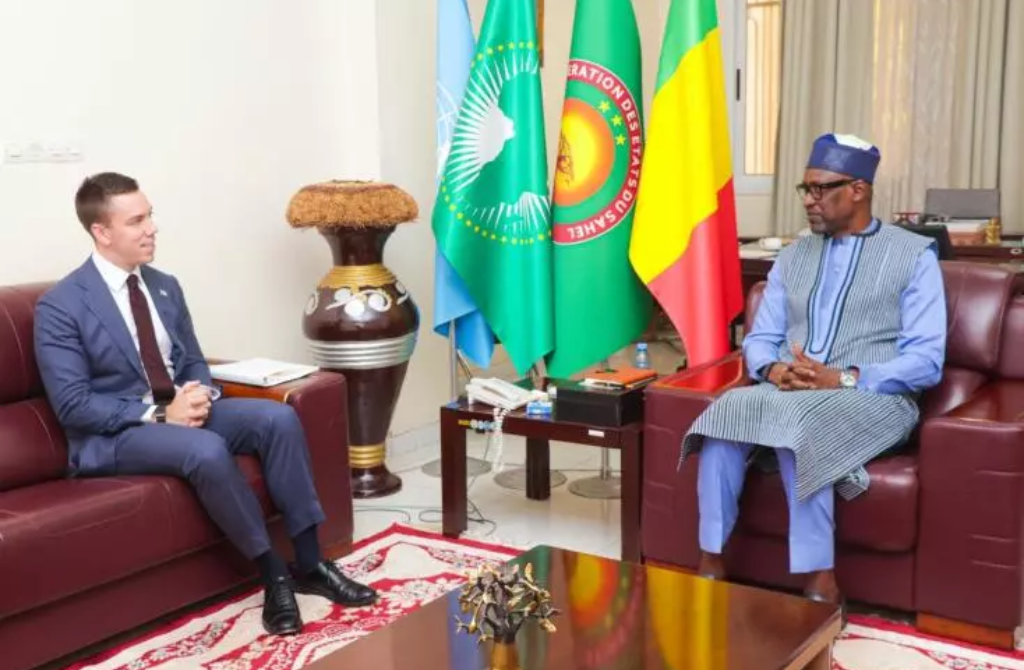
The visit to Bamako of Nick Checker, head of the State Department’s Bureau of African Affairs, marks a turning point in relations between Washington and Mali. After years of rupture and sanctions, the United States is adopting a new tone: respect for sovereignty, a willingness to turn the page on past political errors, and openness to dialogue with Sahelian countries.
This move comes within a weighty strategic context, where the Sahel States Confederation (AES) is asserting itself as a central actor for regional stability, while insecurity spreads toward the western and southern Sahel, threatening the security and development of the entire region.
Since the 2000s, the United States has invested heavily in Sahelian security, training and equipping local armies, supporting the French intervention, and establishing strategic bases, notably in Niger.
However, recent coups d’état and the turn to non-Western military partners, such as Africa Corps, have diminished U.S. influence.
An American return will therefore not be automatic. Washington has set clear conditions, including a return to constitutional order and an end to partnerships with foreign armed groups.
For Mali, this American repositioning presents a dual challenge. On one hand, it opens the door to international support that could stabilize the region and advance development projects long hindered by insecurity.
On the other hand, it requires sensitive political and diplomatic compromises, demanding that Bamako balance national sovereignty with strategic pragmatism.
American diplomacy, now focused on economics and security rather than formal democracy, offers a lever for concrete cooperation: infrastructure, trade, and investment projects could finally benefit from increased stability.
This new dynamic reflects a simple but essential observation: no Sahelian country, faced with current security and social challenges, can develop in isolation. Bamako’s ability to frame this American opening within a coherent regional vision, in concert with Burkina Faso and Niger, will be decisive in transforming a fragile situation into a lasting opportunity.
By asserting a dialogue based on respect and shared interest, Mali can not only secure its territory but also lay the groundwork for managed and shared development. In a Sahel where influence is contested, sovereignty must be coupled with strategic intelligence and clear-eyed cooperation.
Neil CAMARA