Diplomacy/African Union unveils new mediation architecture for Eastern DRC
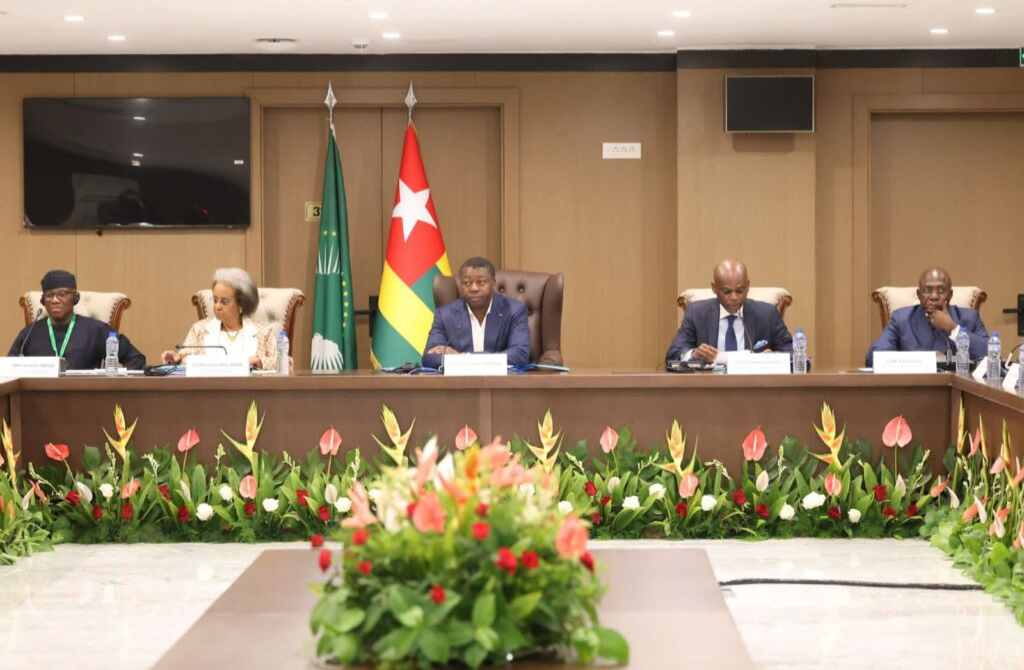
The African Union (AU) has unveiled a new mediation framework for eastern Democratic Republic of Congo, presenting it as a strategic instrument for the African reclamation of peace. In a region where chronic instability has long been a testing ground for external interventions and fragmented responses, this structure aims to restore continental coherence and responsibility in a peace process requiring authority, legitimacy, and continuity.
The appointment of Togolese President Faure Gnassingbé as mediator embodies this approach.
He is not merely a coordinator, but the central pivot around which clearly defined responsibilities and high-level political expertise are organized.
The thematic structure supporting him features significant figures: Olusegun Obasanjo for military and security matters, Sahle-Work Zewde for humanitarian issues, Uhuru Kenyatta for dialogue with armed groups, Mokgweetsi Masisi for regional economic cooperation, and Catherine Samba-Panza for civil society, reconciliation, and women’s participation.
Each lends institutional credibility and an essential African grounding to the mechanism, helping to assert the primacy of continental interests.
This organization reflects a nuanced understanding of the challenges in eastern DRC, where peace extends beyond the cessation of hostilities to include state reconstruction, social justice, civic inclusion, and the protection of vulnerable populations.
The establishment of an independent joint secretariat, involving African states and regional institutions, strengthens technical coordination, while the AU Commission maintains links with international partners ensuring African mediation remains in control of its own agenda.
Beyond its sophistication, however, this architecture will be judged by its ability to translate intentions into tangible results.
It must confront the temptation of external interference, manage divergent regional ambitions, and maintain a sovereign course amid diplomatic pressures.
Coherence and firmness will be its only guarantees of success, as the recent history of the region shows that fragmentation and indecision only strengthen the resilience of violence.
Eastern DRC demands a peace shaped by Africa itself, with clarity and authority.
This framework, if implemented with rigor, can become a symbol that the continent no longer waits for others to shape its stability and sovereignty.
Here lies the true test of the capacity of Africa to be the architect of its own destiny.
Gilbert FOTSO