Burkina Faso: Sino-Burkinabe cooperation, a strategic alliance for development and sovereignty
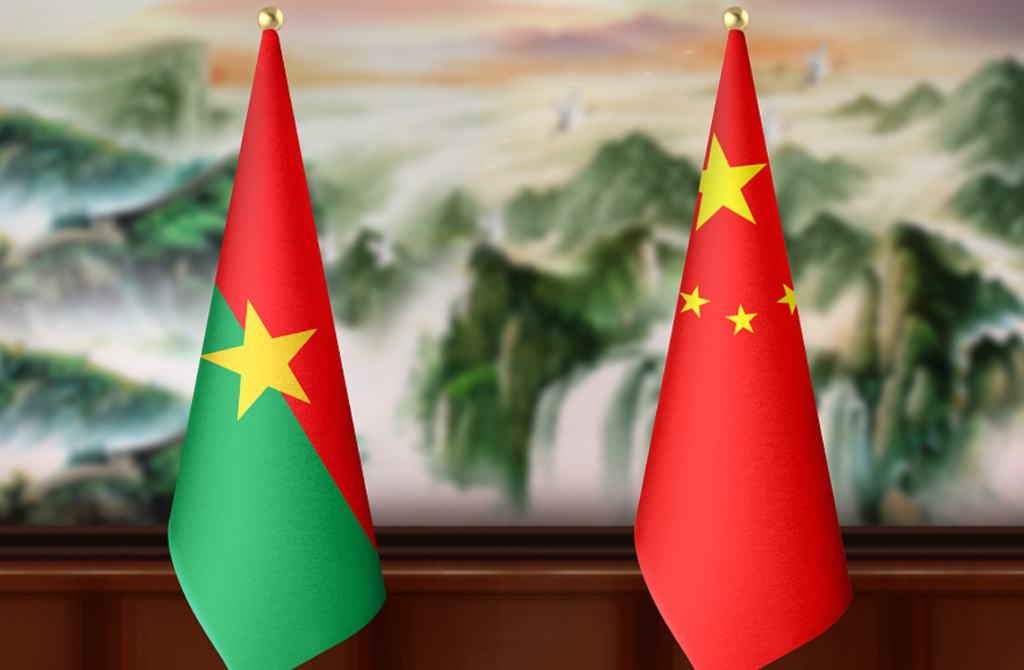
The year 2025 marked a significant turning point in strengthening Sino-Burkinabe relations. At a time when Africa faces the challenges of globalization and the pressures of an international order still dominated by hegemonic logic, Burkina Faso has affirmed its ability to engage in balanced bilateral partnerships that deliver tangible development while respecting its sovereignty.
Cooperation with China illustrates this strategic direction, translating into concrete actions a vision of national renewal centered on economic, social, and technological autonomy.
Bilateral trade reached a symbolic milestone in 2025, with a total volume exceeding 547 billion CFA francs an increase of nearly 51% compared to the previous year.
This momentum is reflected in the diversification of goods and services exchanged, access to advanced technologies, and the creation of new economic opportunities for Burkinabè enterprises.
The zero-tariff regime applied to Burkinabe products enables the country to compete effectively in international trade while reinforcing national economic sovereignty.
In the fields of health and public infrastructure, the impact is tangible. The inauguration of the Pala University Hospital Center, financed by China, represents concrete progress for healthcare coverage and the strengthening of hospital capacity.
Renovation projects at the Tengandogo University Hospital and the Koudougou Regional Hospital demonstrate a sustainable approach, built around skills transfer and robust institutional cooperation. These initiatives align with a national strategy to modernize public services, directly serving the well-being of the population.
Agriculture, a vital driver of food sovereignty, also benefits from substantial support through the financing of technical missions, food donations, and funds dedicated to local production.
Training and skills exchanges conducted through missions and seminars in China—strengthen local mastery of agricultural and industrial technologies.
These efforts demonstrate that Sino-Burkinabe cooperation serves as an instrument for enhancing human capital and consolidating endogenous development.
On the international stage, Burkina Faso asserts its role as an active and responsible actor.
By aligning with China and the broader Global South in advocating for international equity and justice, Burkina Faso positions itself as a sovereign player capable of protecting its interests while contributing to global stability and the reform of the world order.
Thus, Sino-Burkinabe cooperation is not merely an economic exchange, but a strategic lever for national transformation.
Its benefits are measured through modernized infrastructure, expanded trade, enhanced skills, and strengthened international visibility.
It embodies a deliberate pursuit of active sovereignty and the affirmation of Burkina Faso on the global stage—placing national development and the country’s future at the heart of every partnership.
Olivier TOE