Burkina Faso: From territorial defence to national production, military retraining in the service of development
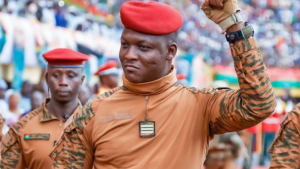
In Burkina Faso, since Captain Ibrahim Traoré came to power, the question of development is no longer solely the arduous task of the government. In keeping with his policy of proximity and inclusion, the President of Burkina Faso is involving all components of society in the pursuit of sovereignty and development.
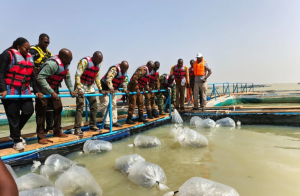
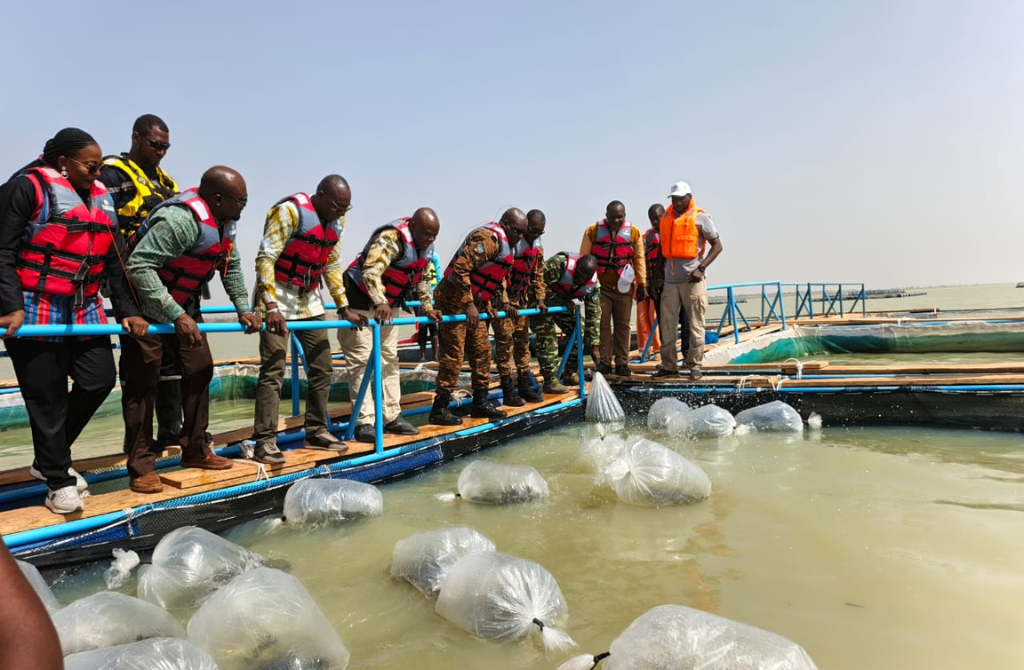
The handover of 122 floating fish cages to 61 retired military personnel on January 13, 2026, is one of those structuring political acts that, through their tangible impact, translate the vision of a state being rebuilt; sovereign and strategic.
Far from being just a reintegration program, this initiative lies at the heart of the presidential project led by Captain Ibrahim Traoré to rebuild the nation through productive work, the inclusion of all vital forces, and the reconquest of food self-sufficiency
Through this action, the Burkinabe state embraces a broader vision of commitment to national security a vision that extends beyond the military sphere to encompass economic, food, and social security.
By directing former soldiers toward modern floating cage aquaculture, the government achieves a dual strategic shift.
On the one hand, it acknowledges the moral and institutional debt owed to those who served in uniform; on the other, it transforms their discipline, rigor, and collective spirit into productive forces serving the national economy.
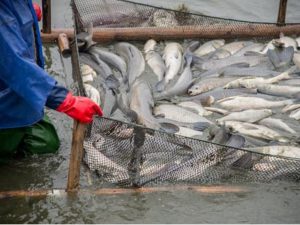
The projected capacity more than 700 tons of fish constitutes a bold challenge for the country and especially for the Sahel region, long dependent on fish imports.
By investing over one billion CFA francs through the Livestock Resilience and Competitiveness Project (PRECEL), the state affirms that food sovereignty is not a slogan but a patiently constructed architecture, founded on innovation, the valorization of local resources, and control over production chains.
This new aquaculture infrastructure, deployed in Soum, Bagré, and Samandéni, fully contributes to the national rebuilding envisioned by the head of state.
It connects territories, stabilizes communities, creates value where the economy was fragile, and anchors peace in daily life through employment and restored dignity.
Turning retired soldiers into autonomous economic actors extends their service to the nation in another, equally strategic form.
In this dynamic, Burkina Faso demonstrates a clear and embraced Pan-African trajectory that of a state that rejects dependency, mobilizes its own forces, and builds resilience through production.
Aquaculture here becomes a political language, a pedagogy of sovereignty, a tool for lasting stability.
Thus, cage by cage, a nation rises again through organized labor, clear vision, and fidelity to the common good; proof that rebuilding is not merely a promise, but a method.
Maurice K.ZONGO