Niger: 77 tonnes of high-tech equipment to revolutionise education
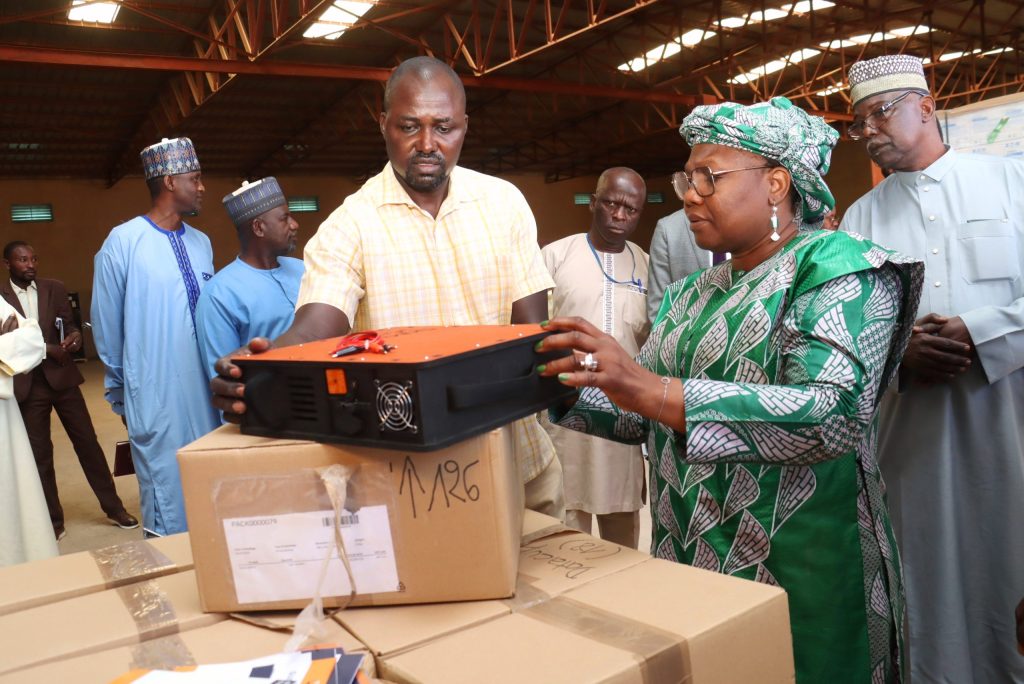
The Minister of National Education, Literacy, and Promotion of National Languages of Niger, Dr. Élisabeth Shérif, conducted an emblematic field visit on Thursday, January 8, 2026, to the UNOPS warehouses in Harobanda. The reason for her presence reflects a significant step forward for Niger’s schools: the receipt of a massive batch of computer equipment aimed at accelerating the modernization of the education system.
This major technological investment, with a total weight exceeding 77 tons, embodies a strong political will for structural transformation.
Procured as part of the strategic partnership between the State of Niger and the World Bank through the Niger-LIRE project, this equipment is both diverse and substantial.
Related/ Niger: Education 2.0 under the leadership of Army General Abdourahamane Tiani
It notably includes 13,000 tablets, over 2,600 desktop and laptop computers, uninterruptible power supplies, printers, video conferencing devices, a complete server room, and the necessary technical licenses.
For Dr. Élisabeth Shérif, this delivery marks a “structuring stage” in the digital transformation of education.
It pursues a dual objective: strengthening the efficiency of school administration and revolutionizing classroom teaching conditions by providing educators and learners with tools suited to the 21st century.
This initiative firmly aligns with the vision upheld by the highest authorities of the country, President of the Republic General Abdourahamane Tiani and Prime Minister Ali Mahamane Lamine Zeine, who have made education a fundamental pillar of national renewal.
The progressive deployment of this equipment in schools, decentralized administrative offices, and training centers promises a positive ripple effect across the entire territory.
Beyond enriching daily classroom instruction, perhaps the most strategic impact lies in the potential to massively expand distance learning.
This dimension is crucial for a country like Niger, where certain areas face significant security and geographical constraints.
By ensuring educational continuity despite these challenges, digital technology becomes a tool for equity and inclusion, enabling every child, wherever they may be, to access quality knowledge.
This initiative goes far beyond a simple logistical provision. It illustrates a profound ambition: to make digital technology an irreversible lever for equity, resilience, and performance across Niger’s entire education system.
By connecting its classrooms and administrative offices to modern technology, Niger is laying solid foundations to build a fairer, more innovative school system, better prepared for future challenges; thus perfectly aligning its actions with the strategic directions assigned to the Ministry of Education.
Neil CAMARA