Burkina Faso: Burkina Cajou, cornerstone of transformation and economic autonomy
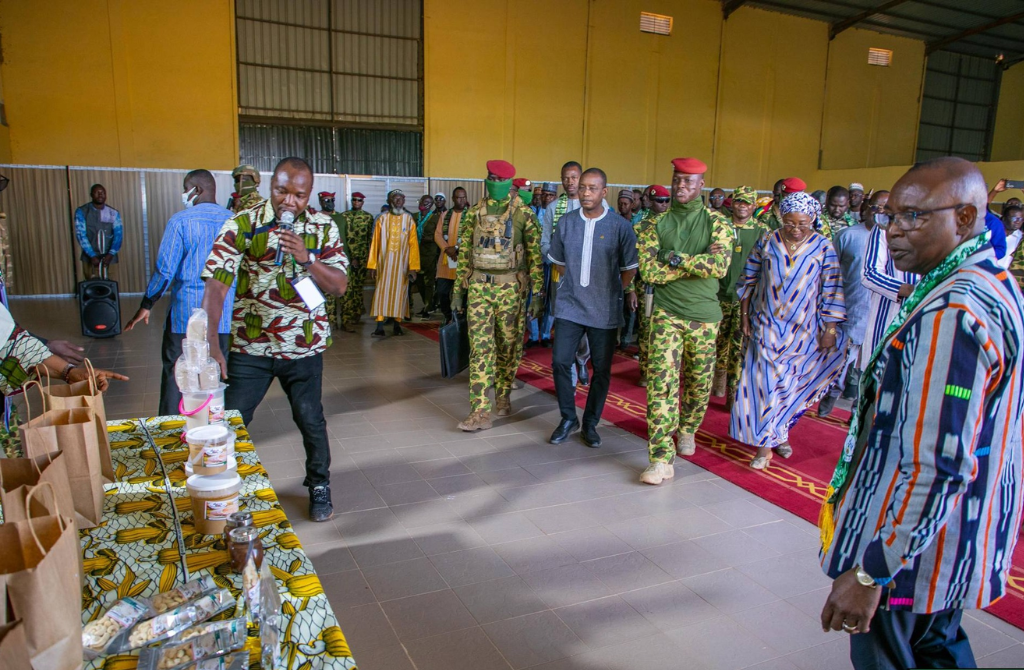
In Bobo-Dioulasso, within the Bobo 2010 industrial zone, the inauguration of Burkina Cajou has proven to be far more than a mere economic event it stands as a strong political signal, revealing a clear and assumed strategic direction: that of a Burkina Faso which chooses to produce, process, and decide for itself.
Driven by the initiative of Captain Ibrahim Traoré, industrialization is moving beyond rhetoric into the realm of structured action.
Burkina Cajou first embodies a systematic break. A break from a dependent economy, long confined to exporting its raw resources.
A break also from the idea of a spectator state, hesitant to support national initiative. By backing this project, the Head of State establishes a foundational principle: Burkinabe resources must be processed on national soil, by national expertise, in service of national development.
This statement, simple on the surface, profoundly redefines Burkina Faso’s place in value chains.
Thus, the factory fits within a coherent political vision, where economic sovereignty becomes a pillar of the ongoing reconstruction.
Processing cashew locally, structuring a strategic sector, creating thousands of direct and indirect jobs these choices outline a rooted economy, capable of stabilizing regions and offering concrete prospects for the youth.
In a demanding security context, this ability to produce and employ acts as a discreet yet decisive factor for social peace and national cohesion.
Burkina Cajou also tells the story of a state fully assuming its role as a strategist. The coordinated mobilization of public and financial instruments reflects a Transition that is neither an intermission nor a waiting period, but a phase of methodical construction. Support for national entrepreneurship here appears not as a favor, but as a political choice serving the public interest and economic resilience.
Beyond the infrastructure, a renewed image of Burkina Faso is taking shape. The country asserts a narrative of work, production, and regained dignity.
Burkina Cajou thus becomes more than a factory; it becomes a silent yet powerful marker of a state moving forward with method, stability, and confidence.
In this overall coherence, the leadership of Captain Ibrahim Traoré can be read: supporting without substituting, structuring without confiscating, guiding without stifling.
Industry becomes a lever for collective advancement, a foundation for lasting stability, and an instrument for reclaiming the national destiny. Burkina Cajou thus stands as a cornerstone of economic sovereignty under construction and as one of the tangible faces of Burkina Faso’s reconstruction.
Olivier TOE