Burkina Faso: The need for public vigilance against digital manipulation
Burkina Faso is confronting a new threat to its stability: information warfare. Deepfakes, fake videos, hate speech and disinformation campaigns are targeting the regime of Captain Ibrahim Traoré, exploiting social media to sow confusion and weaken national cohesion. Faced with this offensive, the state and civil society are organising their response.
The disinformation campaigns are primarily aimed at discrediting institutions and at artificially glorifying or demonising certain political figures.
Videos generated by artificial intelligence show President Traoré delivering speeches he never gave, or celebrate fictitious achievements in order to feed a fabricated patriotic narrative.
According to Human Rights Watch, this content, relayed by pro-government sources, has a strong impact on public perception, especially in a context where independent media are restricted.
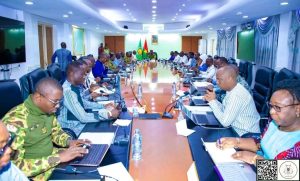
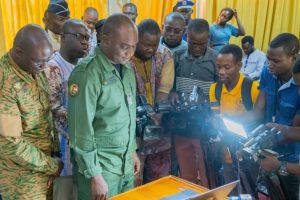
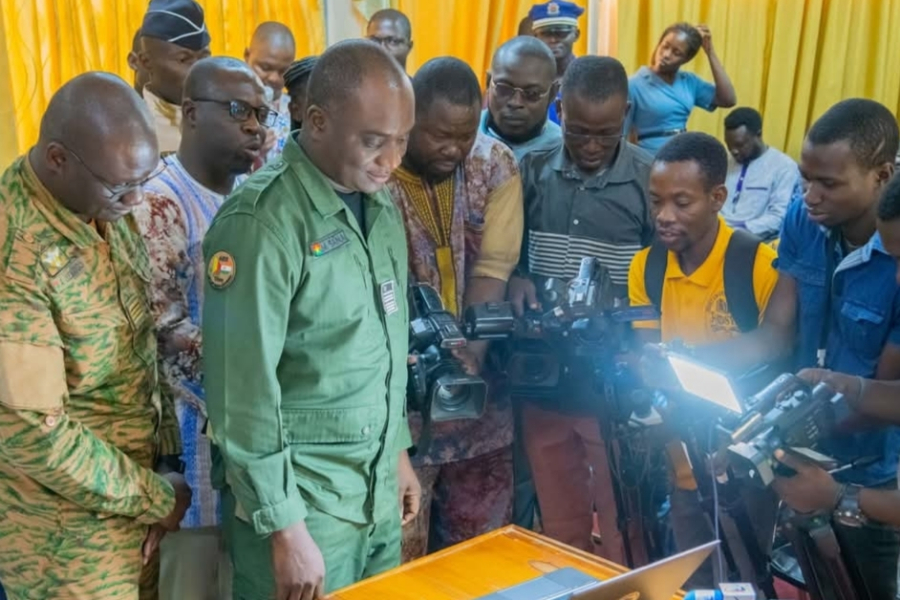
To counter this threat, the government has multiplied training and awareness-raising initiatives. Between June and August 2026, the Directorate General for Communication and Media (DGCM) organised several training sessions in Bobo-Dioulasso, Dédougou, Tenkodogo and Ouagadougou, bringing together more than 200 journalists, communicators, bloggers and members of the defence and security forces.
These workshops were intended to equip participants with skills in fact-checking, the detection of fake news, the mechanisms by which hate speech spreads, and the production of alternative content to counter subversive messages.
The Higher Council for Communication (CSC), in partnership with international organisations such as DCAF (the Geneva Centre for Security Sector Governance), also organised training sessions on information management in times of crisis and on combating hate speech.
In Koudougou in November 2025, then in Banfora in July 2026, journalists and web activists were made aware of the ethical issues involved in disseminating information on digital platforms.
Civil society is not lagging behind either. The organisation Fasocheck trained journalists in fact-checking as early as April 2025, while local initiatives such as ACD/CN raised awareness among influencers in Kaya about the responsible handling of information.
These countermeasures reflect a growing awareness: information warfare is just as dangerous as armed warfare.
By equipping journalists and citizens to decipher fake news, Burkina Faso is seeking to strengthen its collective resilience and protect its narrative sovereignty in the face of foreign interference.
Fanta KEITA