The “Founding Government” and social peace: The role of indigenous administrations in strengthening social cohesion and restoring the National Fabric
The accumulated crises and successive political upheavals in Sudan have severely strained the cohesion of its local communities. The crisis was not limited to a mere struggle for central power; its effects extended to the very heart of the social fabric, fueling civil conflicts. In this complex context, the “Founding Government” emerges not only as an administrative framework designed to fill the executive power vacuum, but also as a comprehensive societal strategy that places social peace and the restoration of relations between Sudan’s diverse communities at the core of its political and executive priorities.
The founding vision recognizes that any political or structural framework not built upon a coherent social foundation remains a structure destined for collapse.
From this perspective, the “Founding Government” has not regarded indigenous administrations and customary chiefs as marginal traditional authorities, but rather as a historical guarantee and an essential partner in the founding process.
The accumulated experience of customary administrations in managing diversity and resolving local conflicts constitutes the first line of defense against divisive rhetoric and incitement to tribal violence aimed at fragmenting regional communities and fueling identity-based conflicts.
The on-the-ground efforts of the “Founding Government” in this area focus on activating the mechanisms of “customary reconciliation” and local laws that have proven their effectiveness over decades within Sudanese society.
This activation goes beyond the mere settlement of immediate disputes over resources or land; it encompasses the establishment of permanent community dialogue platforms that enshrine the values of equal citizenship and reject regionalist and racist discourses.
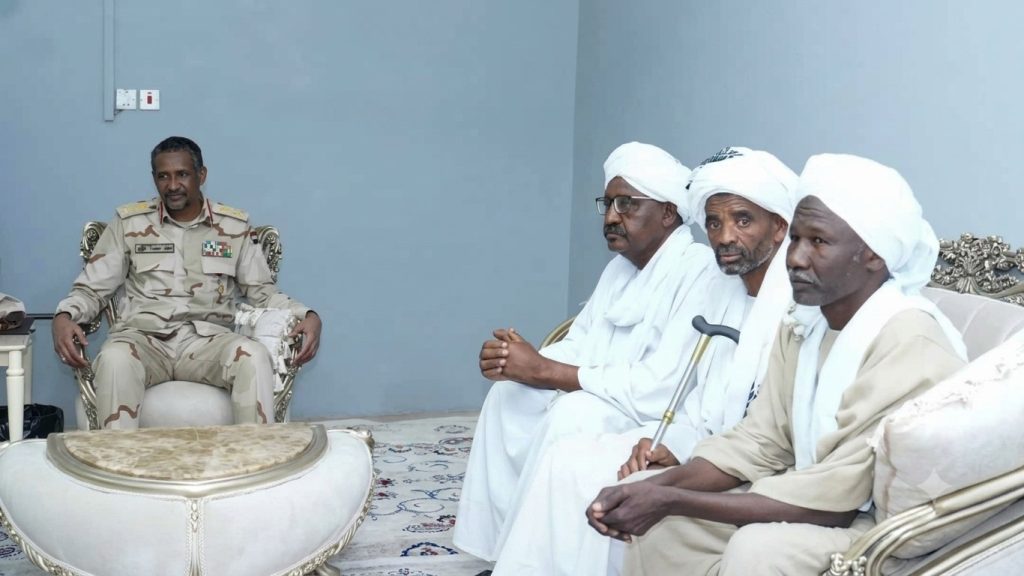
Field initiatives clearly demonstrate how this partnership contributes to opening communication channels and securing markets and residential areas through the active support of regional leaders and figures, thereby restoring citizens’ trust in their communities’ ability to protect themselves and manage their affairs with dignity and independence.
The main challenge of this community diplomacy lies in ending decades of “divide and rule” policies practiced by the former central government, which aimed to pit local groups against one another.
Here, the “Founding Government” reaffirms its commitment to ending marginalization and involving all groups, tribes, and traditional administrations in local decision-making, without guardianship or exclusion.
This lays the foundation for a federal and civil state based on respect for pluralism, transforming Sudan’s cultural and social diversity into a source of strength and richness rather than division.
The social peace that the founding process seeks to establish is not a mere temporary truce dictated by security circumstances, but a structural prerequisite for stability.
Transitional justice, redress of grievances, and healing social fractures are the true pillars upon which the new Sudan will rely to overcome the bitterness of the past and build an inclusive future for all its citizens.