Sierra Leone: President Julius Maada Bio – leadership in the service of democracy and regional integration
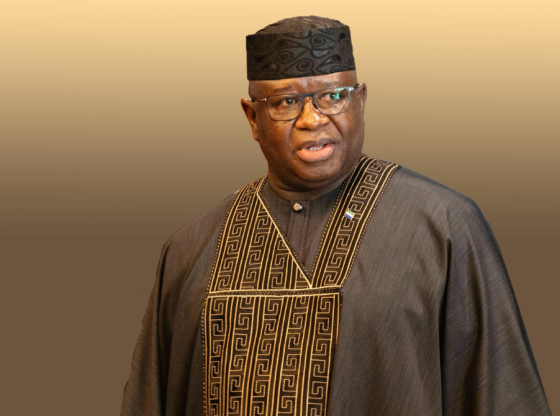
On June 22, 2025, Sierra Leonean President Julius Maada Bio assumed the chairmanship of the ECOWAS Authority of Heads of State and Government, succeeding Nigeria’s Bola Tinubu. Hailed as a historic moment for his country, this election places at the helm of the regional organization a leader whose vision and priorities could redefine the future of West Africa.
From the outset of his tenure, President Bio clearly defined four major axes for his one-year mandate. Restoring constitutional order and deepening democracy constitute his first challenge.
This priority comes at a time when West Africa, sometimes dubbed the “coup belt,” has seen countries such as Mali, Burkina Faso, and Niger leave ECOWAS to form the Alliance of Sahel States (AES).
Revitalizing regional security cooperation is the second pillar of his agenda. In the face of the terrorist threat spreading from the Sahel to coastal states, ECOWAS must strengthen its collective response mechanisms. President Bio is particularly working to revitalize the ECOWAS Standby Force.
President Bio’s commitment is translating into tangible achievements. Sierra Leone recently inaugurated the Julius Maada Bio International Conference Center and an ECOWAS logistics depot in Lungi.
These infrastructures aim to position Sierra Leone as a diplomatic and security hub for the entire sub-region.
On the economic front, President Bio has announced the West African Integration and Investment Summit, scheduled for August 2026, to “unlock economic integration.” The goal is to strengthen intra-regional trade, value chains, and job creation, particularly for women and young people.
The fourth pillar of his vision concerns “building the institutional credibility” of ECOWAS.
President Bio is aware, as one political analyst puts it, that the region needs “pragmatic and inclusive actions to regain its credibility and relevance.”
This means restoring citizens’ trust in an organization sometimes perceived as distant, by strengthening the transparency, efficiency, and accountability of its institutions.
The task is immense, but President Bio’s leadership, bolstered by his experience in peacebuilding, could serve as the catalyst for a new dynamic within ECOWAS one capable of meeting the aspirations for peace, security, and prosperity of more than 400 million people.
Ismael PANDA