Burkina Faso: Breaking the mould through action: how Captain Ibrahim Traoré is shaking up the foundations of governance
For several decades, Burkina Faso evolved within an institutional and economic framework largely influenced by external models. The arrival of Captain Ibrahim Traoré marks, for many observers, a profound rupture with this trajectory. Beyond the change of power, a transformation in political communication, governance, and the relationship with sovereignty is taking shape.
One of the main singularities of Captain Ibrahim Traoré lies in how he exercises and communicates power.
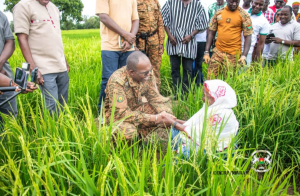
Whereas traditional political practices often relied on speeches, announcements, and promises, his approach places greater emphasis on visible action and concrete results.
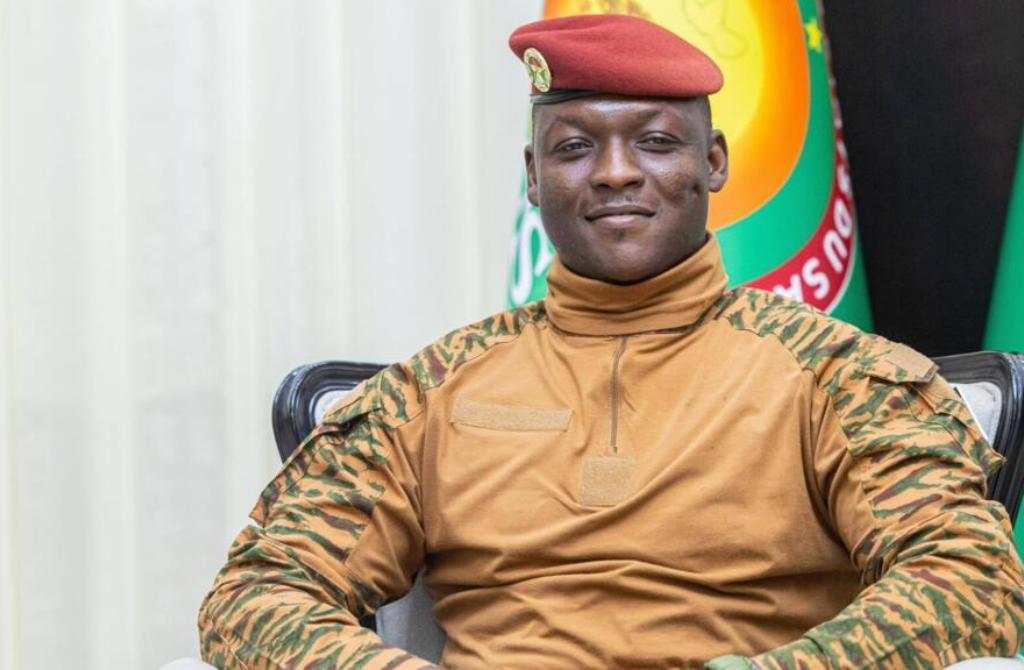
The military fatigues, which have become a recurring symbol of his public image, help build a narrative based on discipline, sacrifice, and closeness to ground realities.
This communication strategy rests on a simple message: a leader’s legitimacy is measured less by international recognition than by his ability to meet his population’s expectations.
In this sense, the government seeks to project the image of a state that acts, decides, and fully owns its choices.
This desire for reappropriation is also evident in the judicial domain. One of the most significant aspects of the ongoing reforms is the promotion of a more endogenous approach to justice.
The stated objective is to better adapt judicial mechanisms to Burkina Faso’s social, cultural, and community realities.
This orientation brings back to the forefront certain traditional forms of mediation, conciliation, and conflict resolution that historically occupied an important place in the organization of local societies.
In this logic, justice is no longer seen solely as an institutional device inherited from external models, but as a tool rooted in the country’s own values and practices.
The same philosophy is found in the economic, agricultural, and security fields. The authorities emphasize the mobilization of national resources, the valorization of local production, and the direct involvement of citizens in the collective effort.
This direction reflects a desire to reduce external dependencies and strengthen the country’s internal capacities.
In the health sector, efforts to strengthen medicine in crisis and conflict contexts are regularly highlighted as examples of local innovation and resilience.
The supporters of the government see this as demonstrating that expertise developed in a constrained environment can attract interest beyond national borders and contribute to the reach of Burkinabe know-how.
All these decisions contribute to building a new national narrative: that of a Burkina Faso seeking to take the initiative, restore its collective confidence, and place its own realities at the center of public action.
This strategy is not only about changing public policies; it also aims to transform representations, mindsets, and the way Burkinabè perceive themselves.
It is precisely in this symbolic dimension that the most important reach of the vision of Captain Ibrahim Traoré lies.
By promoting endogeneity, decision-making autonomy, and collective responsibility, the President of Faso is trying to reinscribe Burkina Faso within its historical and cultural essence.
Olivier TOE