Ouagadougou: AES Confederation Ministers adopt year II roadmap to cement Sahel Alliance
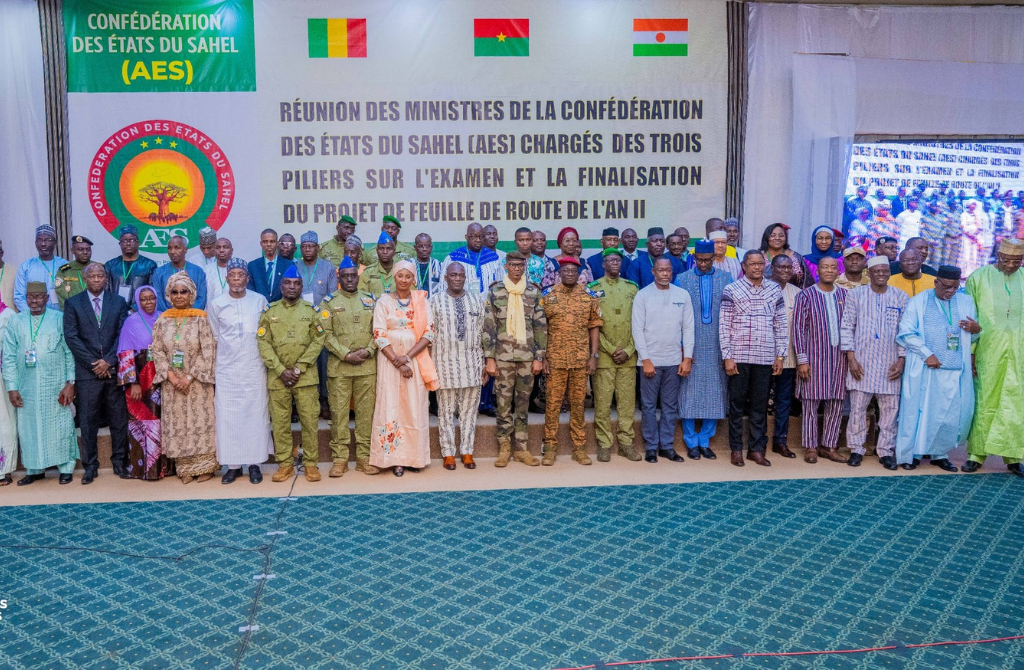
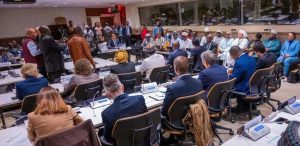
Ouagadougou was the scene, on this February 26, 2026, of a decisive political sequence for the AES Confederation. Around the table, ministers from Burkina Faso, Mali, and Niger adopted the Year II roadmap, extending the momentum initiated under the presidency of General Assimi Goïta. The challenge is to transform an alliance born out of urgent security needs into a durable architecture for sovereignty and development.
After forty-eight hours of technical deliberations, the ministerial delegations refined a document intended to structure confederal public action.
The framework established by General Salifou Mody for Niger and General Sadio Camara for Mali was clear: consolidate the achievements of Year I, strengthen military coordination, harmonize diplomatic positions, and accelerate economic integration.
The remarks by Bassolma Bazié, on behalf of the Burkinabe side, placed this ambition within a broader historical perspective that of a Sahelian space determined to speak with one voice.
Year I laid the foundations: pooling certain defense capabilities, asserting independent strategic options, and establishing common bodies. Year II must now produce tangible effects for the populations.
The announced reform aims to better coordinate security policies to secure trade routes, facilitate exchanges, and restore the confidence of domestic investors.
In economies weakened by insecurity and sanctions, stability becomes a lever for growth.
The expected impact is twofold. On one hand, rationalizing defense spending through shared resources can free up budgetary margins for social sectors.
On the other, economic integration if it translates into shared infrastructure, harmonized standards, and easier movement of goods; can expand domestic markets and stimulate local entrepreneurship. For Burkina Faso, Mali, and Niger, the challenge is to transform political solidarity into productive momentum.
This roadmap will only be credible when tested against reality. It must be accompanied by precise indicators, a binding timeline, and clear accountability.
The maturity of the AES Confederation is at stake here. Either it establishes itself as a Sahelian pole capable of influencing regional balances, or it remains an unfulfilled promise.
In Ouagadougou, the ministers chose to write the next chapter. What remains now is to prove that proclaimed unity can become a concrete force serving the peoples, for history only remembers alliances that transform hope into reality.
Olivier TOE