Burkina Faso/UN: Three transformative programs to guide public action
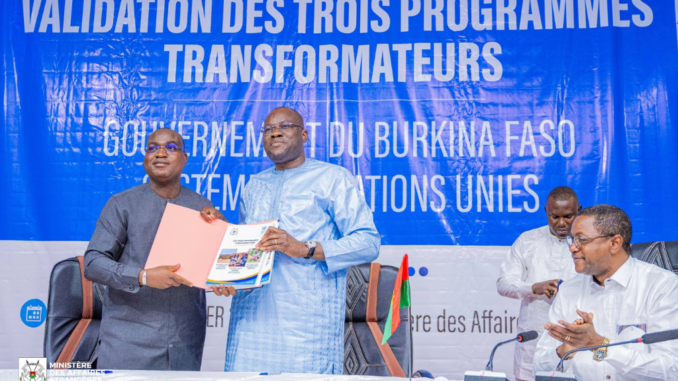
In a Burkina Faso tested by prolonged insecurity, social fragility, and economic pressure, true political action can be measured by its ability to create coherence where fragmentation and urgency once prevailed. The approval in Ouagadougou on February 6, 2026, of three Transformative Programs between the Burkinabe state and the United Nations system reflects this logic of strategic refocusing and long-term vision.
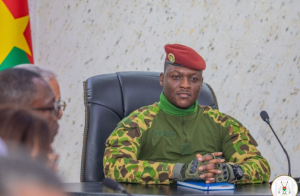
Under the leadership of President Ibrahim Traoré, the executive branch has set a clear direction.
The goal is no longer to juxtapose sectoral responses, but to organize public action around a deliberate triad: stabilizing the territory, feeding the nation, and strengthening community resilience.
These programs, born from a co-creation process with UN agencies, reflect a political approach in which international partnership serves as a lever for; not a substitute for national sovereignty.
The sustainable transformation of food systems, stabilization and cross-border cooperation, and the humanitarian-development-peace nexus form a unified framework.
Together, they outline a realistic understanding of the country’s vulnerabilities and a structured response to accumulated fractures.
The Program to Support the Humanitarian-Development-Peace Transition, entrusted to the Ministry of Women and Solidarity, embodies the will to move beyond temporary assistance toward rebuilding a social contract tested by crisis.
The objective is clear: to place people at the heart of public decision-making and restore trust where it has eroded.
The effects of this approach are gradually materializing on the ground. In strategic agricultural zones, food security is being reinforced with productive investments and sustainable income prospects.
In vulnerable territories, stabilization takes shape through local employment, access to social services, and the reaffirmation of a visible and useful state presence.
Thus, politics is recovering its primary function: transforming daily life rather than managing exceptions.
On the international stage, Burkina Faso is asserting itself with newfound clarity. It engages in chosen partnerships, aligned with its priorities, and rejects any logic of dependency.
This deeply Pan-African posture repositions the country within a diplomacy of responsibility and mutual respect.
By the end of this chapter, one reality stands out: Burkina Faso is moving forward, convinced that sovereignty is fully realized only when it translates into stability, dignity, and a shared future.
Olivier TOE