Burkina Faso / Political reform: Dissolution of political parties to restore citizens’ trust in political institutions
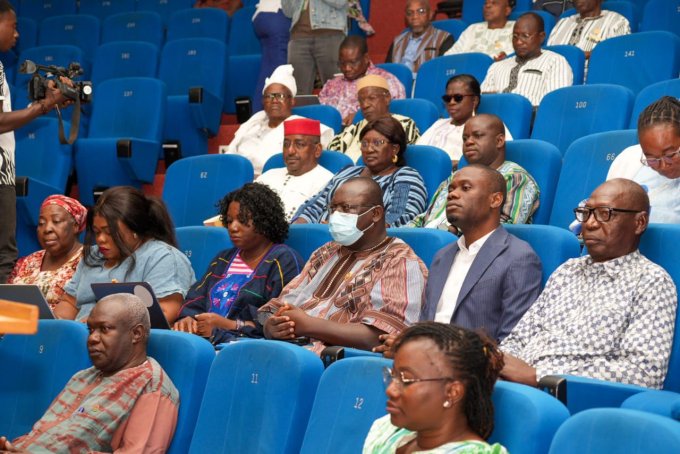
In unanimously adopting the law to dissolve all political parties, the Transitional Legislative Assembly (ALT) of Burkina Faso has embarked on a radical overhaul of the partisan landscape; a move presented as a remedy to systemic crisis. Faced with institutional decay and a severe security emergency, the government justifies this measure as necessary to correct the excesses born of multiparty politics and to lay the groundwork for a renewed political contract.
The decision explicitly targets the shortcomings of a system still governed by laws dating from 2001 and 2009.
In the executive’s view, these texts led to the anarchic proliferation of parties lacking clear ideology, territorial roots, or genuine representativeness.
This fragmentation, it argues, drained political competition of meaning, fueled clientelism, and eroded the trust of the citizens in institutions.
In a country confronting grave insecurity and existential threats, this political architecture is seen not only as inadequate but as underperforming.
The proposed law thus aims to be a deep corrective, intended to restore substance to democratic life.
It is not merely about dissolution, but about preparing a future framework in which the formation of parties will likely be subject to stricter requirements—programmatic coherence, national presence, and financial accountability.
The stated goal is to replace a logic of quantity and opportunism with one of quality, where political formations will have the real mission of energizing public debate and structuring citizen expression.
This reform aligns with the broader ambition of the transitional authorities to “refound the State.” By wiping the slate clean of the current partisan system, the government seeks to break with practices deemed sources of instability and inertia.
The aim is to create conditions for a reborn political life, in a later phase, to be aligned with the imperatives of national cohesion and the fight against terrorism.
However, this blanket dissolution; enacted without popular consultation and in a context where the 1991 Constitution remains suspended; raises fundamental questions about the chosen path.
While the government sees it as a salutary cure to cleanse the socio-political scene, critics may perceive it as an authoritarian consolidation of the transitional regime and a further marginalization of dissent.
The future will tell whether this radical surgery succeeds in regenerating trust and creating a healthier political space, or whether it marks a step toward the durable concentration of power.
Olivier TOE