Cameroon: 2026 budget, between investments for the future and immediate emergencies

Faced with a complex national and international context, the Cameroonian government has presented its draft budget for the 2026 fiscal year. This financial document is more than a simple accounting forecast; it embodies a strategy for navigating turbulent economic waters, attempting to reconcile often contradictory imperatives.
Caught between the need to invest for emergence and the obligation to respond to acute crises, the budget priorities outline an ambitious roadmap.
The absolute priority remains securing the territory. The conflicts in the North-West and South-West regions, along with the persistent threat of Boko Haram in the Far North, impose an extremely high level of military and security spending.
For 2026, a substantial portion of the budget is once again allocated to defense, intelligence, and the economic revival of crisis zones.
This nearly incompressible expenditure drastically limits flexibility for other sectors and poses a permanent challenge to balancing public finances.
The second major focus is supporting a fragile economy. Imported inflation, volatile commodity prices, and logistical bottlenecks continue to weigh on growth.
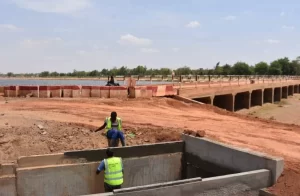
The 2026 budget relies on tax incentives for the private sector, increased support for subsistence agriculture and SMEs, and the continuation of major structural projects like the Nachtigal Dam.
Simultaneously, targeted social measures (subsidies, youth employment programs) aim to cushion the shock of the rising cost of living and preserve social stability, in a climate where public frustration is palpable.
Despite these pressures, the government maintains its focus on future-oriented investments.
The education, vocational training, and health sectors receive particular attention, with the goal of building competitive human capital. Modernizing transport infrastructure (roads, ports, railways) also remains a priority to open up landlocked regions and reduce production costs.
However, financing these ambitious projects in a context of high public debt and pressure on current spending requires prudent borrowing and an increased reliance on public-private partnerships.
Beyond the allocations, the success of this budget will depend on its transparent and effective implementation.
Cameroonians and technical partners expect rigorous management of public funds, a tangible fight against leakage and corruption, and measurable results on the ground.
The ability to execute the planned investment expenditures and ensure that every franc spent truly serves the stated priorities will be the real credibility test for the authorities in 2026.
Ultimately, Cameroon’s 2026 budget is that of a resilient country, seeking to lay the groundwork for sustainable development while fighting multiple short-term fires.
Its precarious balance reflects the profound challenges of the period, where every spending decision is a painful trade-off between the urgent present and the necessary future.
Baba GADO