Burkina Faso: The fisheries initiative at the heart of the self-sufficiency strategy
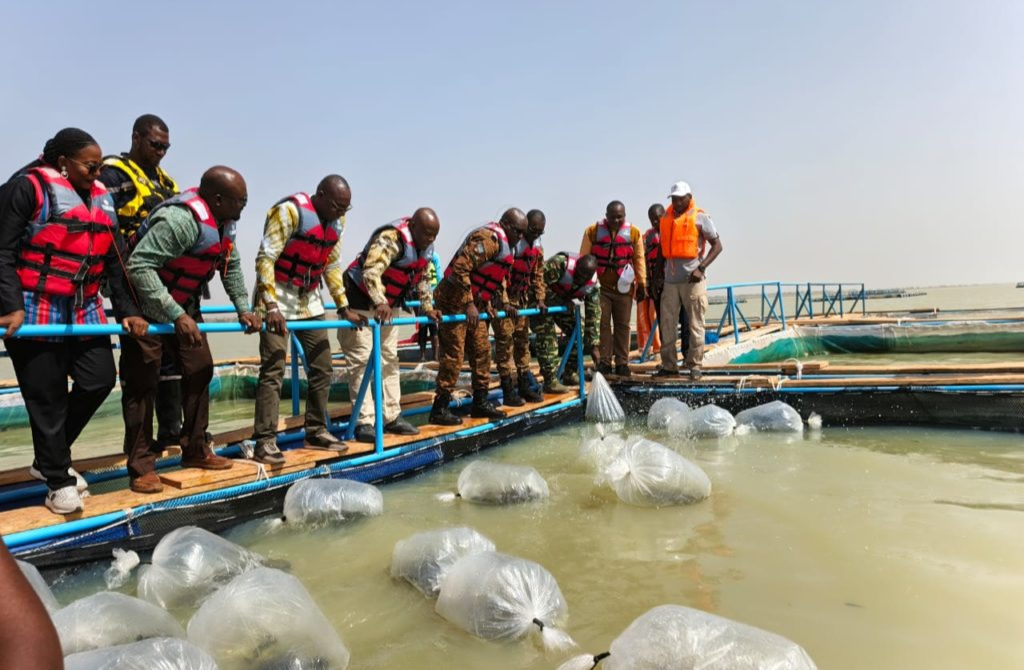
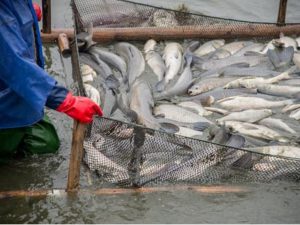
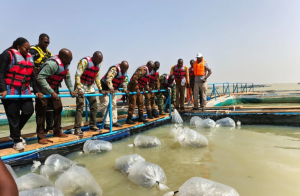
At Samendéni, actions speak louder than words. The fourth harvest of fish from floating cages marks a tangible break with the past under the Popular Progressive Revolution. With 1,760 kilograms extracted in this cycle, the presidential initiative for agricultural production and food self-sufficiency has reached a new operational milestone.
The evolution is significant. In just a few years, the Samendéni reservoir has transformed from a largely unused space into a productive platform with more than 800 floating cages soon to be 1,000.
This rapid deployment reflects a deliberate shift in scale. The state is no longer experimenting; it is industrialising.
Meanwhile, the establishment of national fish feed production units has removed a major bottleneck. Dependence on imported inputs is declining, strengthening the local value chain.
Nationally, fish production has climbed from 25,000 to over 54,000 tonnes annually a structural shift. The target of 100,000 tonnes now seems less a slogan and more a realistic projection based on continuous productive expansion.
Fish farming is becoming a lever for job creation, cooperative income stabilisation, and import substitution.
The strategic importance of this reform extends beyond the sector itself. It illustrates a repositioning of the Burkinabe state as an active organiser of economic sovereignty.
By providing cooperatives with cages, overseeing production, and securing inputs, the government links presidential initiative with community ownership. This avoids paternalism and builds productive responsibility.
Across Africa, the experience of Samendéni sends a strong political signal. It shows that agricultural transformation does not depend solely on external financing, but on a clear internal will translated into concrete mechanisms.
Amid repeated exogenous shocks, control over animal protein has become an issue of both social and economic stability.
Challenges remain: health quality, sustainable water management, and efficient marketing circuits. The model’s credibility will depend on its durability.
On Burkinabe soil, what is being built is more than a fish farming sector. It is a doctrine of sovereignty in action proof that when political resolve meets organisation, autonomy ceases to be a distant horizon and becomes tangible reality.
Maurice K.ZONGO