Burkina Faso: Justice and discipline, levers of the new economic and social order

In Burkina Faso, the fight against cybercrime has reached a decisive turning point. The conviction of two cybercriminals by the Ouaga I High Court, following an investigation led by the Central Cybercrime Fighting Brigade (BCLCC), reflects a broader political dynamic aimed at restoring state authority and moralizing the economic sphere; two key pillars of the national refoundation underway under the leadership of Captain Ibrahim Traoré.
In the Burkina Faso of today, sovereignty is no longer expressed solely on military or diplomatic fronts.
It is also being asserted in the invisible spheres of the digital economy, where financial flows, commercial transactions, and citizen trust circulate.
Cybercrime, long perceived as peripheral delinquency, actually constitutes a direct attack on the integrity of the national economy.
By firmly punishing those responsible for these practices, the judiciary of Burkina Faso is making it clear that the digital space of the country will no longer be a lawless zone.
The severity of the sentences handed down seven years and six years in prison, along with substantial fines reflects this desire for change.
It marks a significant evolution in public policy, where the Burkinabe state now intends to actively protect its economic actors, particularly traders and entrepreneurs often targeted by fraudulent networks.
In a context where digital transformation is becoming a strategic lever for development, securing transactions and exchanges has become an imperative of economic sovereignty.
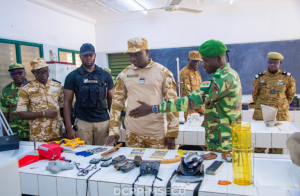
This judicial decision also highlights the growing effectiveness of specialized institutions, such as the BCLCC, whose patient and methodical work helps strengthen the state’s credibility.
Public action here takes on a concrete form: that of an institutional apparatus tracking misconduct, protecting citizens, and reaffirming the rule of law.
This signal is all the more significant as it comes at a time when Burkina Faso seeks to rebuild trust between the state and society.
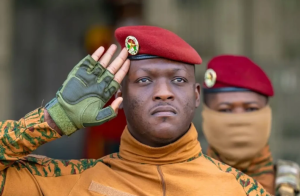
Ultimately, this case reveals a deliberate political choice. The vision championed by President Ibrahim Traoré rests on a simple but demanding idea: national refoundation cannot thrive in a climate of impunity.
On the contrary, it requires collective discipline, rigorous respect for rules, and a justice system capable of protecting the general interest.
By firmly sanctioning these cybercriminals, Burkina Faso asserts that the refoundation of the country is not limited to speeches or symbols.
It is now embodied in acts of justice that restore order and secure the nation’s economic future. And it is precisely here that the political significance of this decision is measured.
Fanta KEITA