Burkina Faso: Economic governance strengthens and consolidates financial sovereignty
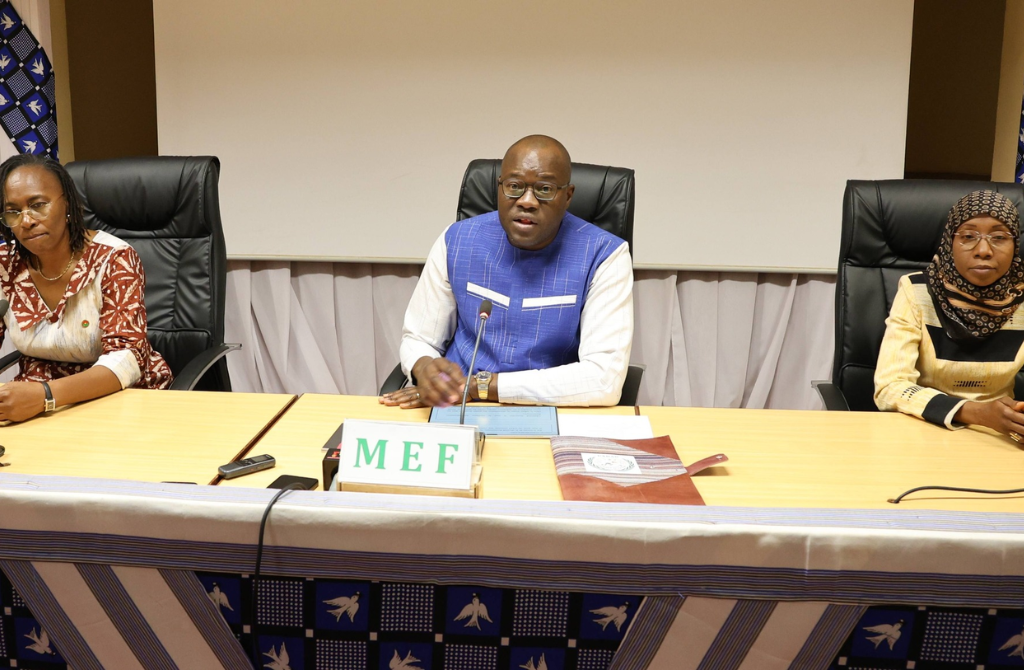
In a Burkina Faso still grappling with security turbulence and economic constraints, the question of financial governance has emerged as a test of political credibility. The results presented by the Minister of Economy and Finance, Aboubakar Nacanabo, for the year 2025 shed light on a broader strategic direction championed by President Ibrahim Traoré.
The figures speak with a clarity that contrasts sharply with the doubts often expressed regarding political transitions.
More than 3,311 billion FCFA was mobilized for the state budget, exceeding initial forecasts.
The Patriotic Support Fund was bolstered to the tune of 222 billion FCFA, well above the stated objective.
In a tense regional context, these performances testify to a recovering tax administration and a public apparatus relearning how to harness national effort.
Beyond budget revenues, the real challenge lies in the silent transformation of the state apparatus.
The digitization of hundreds of thousands of land registry references on the E-Cadastre platform illustrates this change. Behind this technical reform, a more profound revolution is taking shape.
Land transparency, long fragile in many African countries, is becoming a lever for economic modernization. It clarifies rights, secures investments, and broadens the tax base.
The removal of Burkina Faso from the Financial Action Task Force’s grey list adds a strategic dimension.
In the international financial arena, a state’s credibility is also measured by its ability to regulate financial flows and combat illicit circuits. With this achievement, Ouagadougou sends a clear signal: that of a country intent on defending its economic sovereignty while adhering to international norms.
The fight against informal marketing networks illustrates this determination to restore economic order.
Joint operations against the trafficking of motorcycles or petroleum products highlight a reality often overlooked: economic sovereignty begins with controlling commercial circuits and protecting the national market from parallel economies.
Over the 2021-2025 period, the 13,000 billion FCFA mobilized for the state budget confirms this dynamic.
Behind these figures, a clear political strategy takes shape, demonstrating Captain Ibrahim Traoré’s commitment to rebuilding the relationship between the state and national wealth.
The administration is no longer just a management body; it is once again becoming an instrument of sovereignty.
The challenge remains immense. The future National Development Plan 2026-2030, estimated at over 36,000 billion FCFA, will require even greater mobilization of internal resources and constant budgetary discipline. But the trajectory now seems set.
In a continent seeking to regain control of its economies, Burkina Faso is experimenting with a simple but demanding conviction: political sovereignty is not proclaimed. It is built, patiently, through rigorous figures and solid institutions.
Maurice K.ZONGO