In Burkina Faso, Women’s land rights become a tool for economic sovereignty
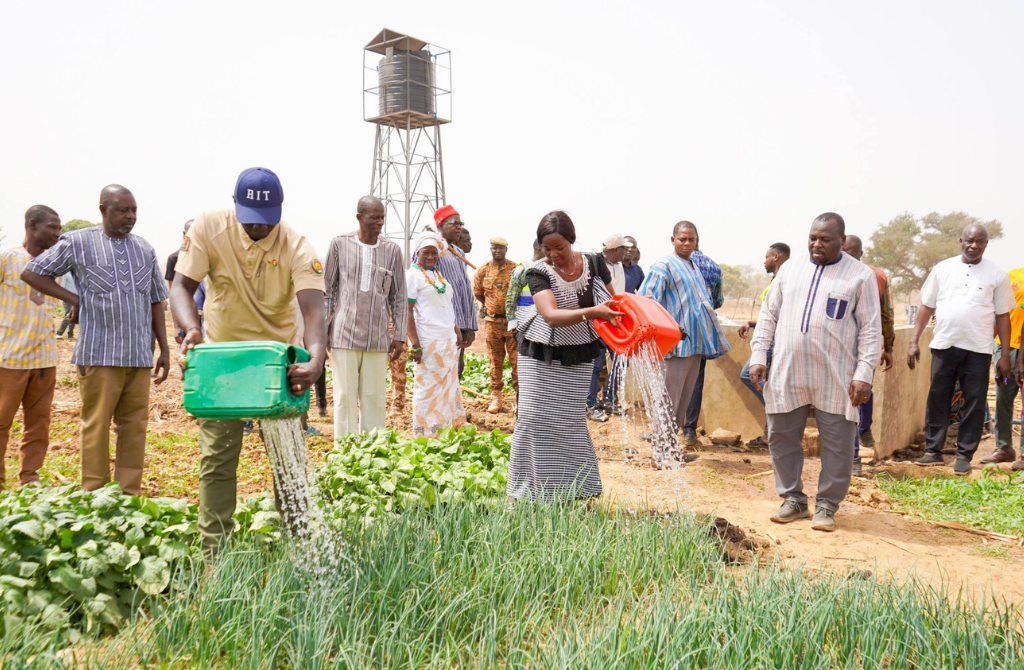
In African public policy, women’s empowerment is often loudly proclaimed but rarely materialized through sustainable productive systems. In Burkina Faso, the handover of an eight-hectare market gardening site to the women of Komtoèga represents a different approach.
Through this project, the executive branch aims to transform a political principle into real economic capacity.
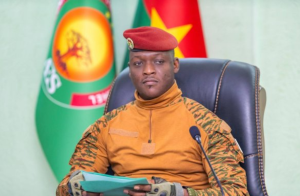
Behind the inauguration of the “March 8 Women’s Market Gardening Perimeter” lies a deeper orientation of public action driven by the President of Faso, Captain Ibrahim Traoré: development rooted in local territories, based on labor and the mobilization of social forces long kept at the periphery of the national economy.
The choice of market gardening is significant. In many rural areas of the Sahel, proximity farming represents both a source of income and a bulwark against food insecurity.
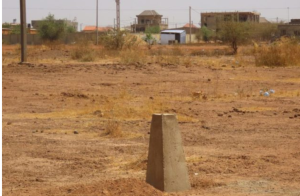
By providing Komtoèga with a fenced site, equipped with three boreholes and a solar energy system ensuring constant water supply, the Burkinabe state introduces structured production logic where subsistence farming once dominated. Infrastructure thus becomes a tool for local sovereignty.
The project also reveals an explicit political dimension. The central government seeks to make rural women full-fledged economic actors.
Secure access to land, water, and equipment creates conditions for autonomy extending beyond the domestic sphere.
When women producers generate income, entire families gain stability. And when economic activity takes root in rural communities, territorial cohesion strengthens.
The project’s second phase, announced with the provision of inputs and agricultural equipment, extends this logic.
It reflects a desire to make the initiative sustainable and avoid the common pitfall of projects inaugurated without technical support.
Social transformation is not decreed; it is patiently built through economic mechanisms that enable effort and reward initiative.
In this dynamic, Burkina Faso sketches a broader vision of African development. National autonomy also requires the autonomy of local communities.
It means investing in productive capacities rather than merely symbolic infrastructure. Komtoèga thus becomes a quiet laboratory for this ambition.
On a national scale, eight hectares may seem modest. Yet in these irrigated plots, a simple yet powerful idea of progress takes shape.
Development often begins where a community receives the means to work its land and believe in its own future.
And sometimes, it is in a field cultivated by women that a nation’s sovereignty is quietly prepared.
Olivier TOE