Ghana turns to China to bridge palm oil deficit and build local industry
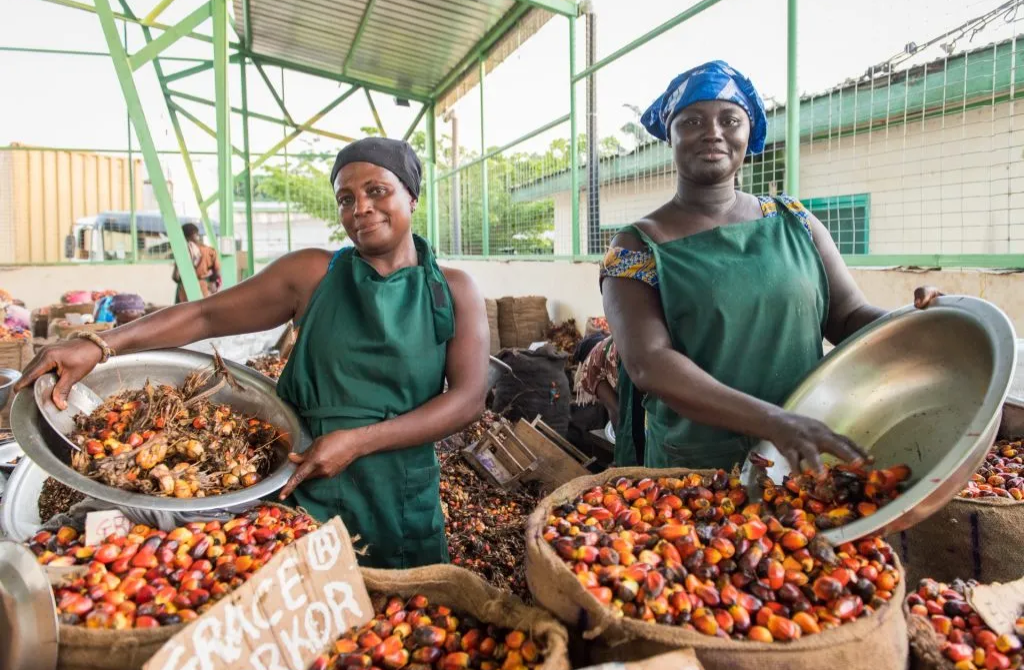
Ghana is repositioning its palm oil sector as a strategic industrial priority, moving beyond agriculture toward economic sovereignty through value addition. With annual production falling short by nearly 200,000 tons costing the country approximately $200 million in imports Accra is now seeking Chinese investment to transform the sector.
Speaking at the Chinese Lunar New Year gala in Accra, Agriculture Minister Eric Opoku delivered a clear message: Ghana wants industrial partners, not conventional financial assistance.
The appeal to Chinese investors explicitly aims to shift the commercial relationship toward local production and joint ventures.
Behind this orientation lies a conviction shared across African capitals; that economic sovereignty is built through value chains, not merely through goods circulation.
The government has prepared an ambitious framework. A $500 million financing facility will support the national integrated palm oil development policy from 2026 to 2032.
Incentives include long-term loans, five-year repayment moratoriums, concessional rates, and coverage of 70 percent of industrial project costs.
The goal is to create a robust agro-industrial fabric capable of absorbing future production.
The strategy also rests on an agricultural bet: 100,000 hectares of new plantations to supply processing units.
Ghana seeks to correct a paradox common in West Africa; land exists, crops are known, but industrial infrastructure and markets remain underdeveloped.
For Accra, China represents both financial and technological partnership. Beijing brings recognized expertise in vegetable oil processing and agronomic research on tropical crops.
Scientific cooperation elsewhere on the continent demonstrates how such partnerships can accelerate productivity gains and high-yield variety adoption.
Success will also require firm regulation of the domestic market. Ghana is already working to curb cheap imported oils and substitutes that undermine local producers.
The palm oil battle reflects a deeper transformation: a country seeking to reclaim control of its agricultural resources to build a productive economy.
The continent’s economic future will depend less on raw material exports than on Africa’s capacity to shape value.