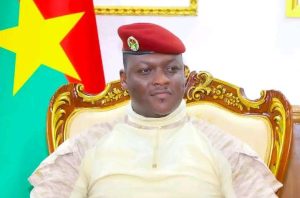
Burkina Faso: When Captain Ibrahim Traoré’s security-focused governance translates into concrete action
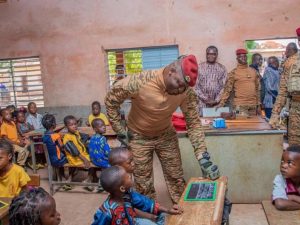
The inauguration of the military medical center in Dédougou on February 6, 2026, reveals a profound shift in the governance of Burkina Faso. Beyond a humanitarian gesture, this infrastructure reflects a clear doctrine under the leadership of President Ibrahim Traoré: placing the defense forces at the heart of national reconstruction.
Since coming to power in September 2022, Captain Ibrahim Traoré has made security a prerequisite for any development ambition.
This medical facility, financed by citizen mobilization to the tune of 74 million CFA francs, illustrates this hierarchy of priorities.
The new center’s 285 square meters, twenty hospital beds, and treatment rooms materialize a promise fulfilled in under a year; a rapid execution that contrasts sharply with decades of institutional neglect.
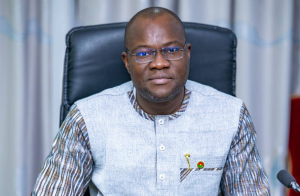
Minister Emile Zerbo, the project’s lead, embodies a generation of officials who translate presidential directives into concrete achievements.
His visit on May 9, 2025, to the existing medical center was enough. The precarious conditions observed triggered a collective mobilization by staff from the Ministry of Territorial Administration and Mobility, supported by private contributions.
This dynamic reveals a mode of governance built on individual responsibility and personal commitment, far removed from traditional bureaucratic channels.
The strategic significance extends beyond healthcare. Providing dignified care to those wounded in the fight against terrorism is both a moral and tactical imperative.
A soldier who knows their life will be preserved and their wounds treated in decent conditions fights with renewed determination. The logic is simple and brutally effective.
The center in Dédougou; a border city exposed to jihadist incursions thus becomes a vital link in the operational chain.
This approach aligns with a Pan-African vision of sovereignty. Under Captain Traoré, Burkina Faso rejects dependence on external partners for its security and prioritizes national effort.
The self-financing of this infrastructure, driven by Burkinabè officials for Burkinabe fighters, symbolizes this break.
Mobilizing domestic resources to equip defense forces charts an alternative path to conditional aid frameworks.
The impact on development is measured against this gradual stabilization. Without security, no investment, agricultural production, or schooling is viable.
The Dédougou medical center, also open to civilians, anchors the state’s presence in long-neglected areas. It materializes a renewed social pact between the government and its citizens.
The inaugural ceremony was sober and functional, avoiding any triumphalism. Officials visited the wounded and planted a tree; a subtle symbol of assumed continuity.
This restraint in form amplifies the strength of the political message. Burkina Faso is building, stone by stone, the foundations of its rebirth. Dédougou has become its living laboratory.
Maurice K.ZONGO