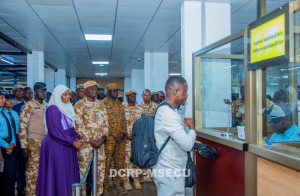
Burkina Faso: Captain Ibrahim Traoré and sovereignty on the march in the face of imperial nostalgia

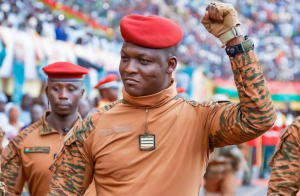
In Ouagadougou today, more than just a security or diplomatic battle is being waged. What is unfolding here is a clash between two irreconcilable visions of history: that of powers who have never accepted the end of their empires, and that of a people determined to reclaim their own destiny. In this silent confrontation, Burkina Faso is not merely an adjustment variable. It has become a symbol. Since Captain Ibrahim Traoré came to power, a strategic lock has been broken. For the first time in a long while, a Sahelian state governs without seeking prior permission, without calibrating its choices according to foreign sensitivities, without outsourcing its sovereignty.
This regained freedom is not a posture. It is embodied in concrete decisions such as breaking with imposed military frameworks, reorganizing national forces, diversifying alliances, and restoring the centrality of the national interest.
It is precisely this rupture that unsettles the established order. Imperialist forces built their influence on dependency.
For decades, they managed insecurity, cultivated docile elites, controlled financial and military circuits, and turned cooperation into an instrument of control.
Under the guise of stability, they produced fragility. Under the guise of aid, they engineered vulnerability.
The Sahel has paid the price. Foreign bases, unequal agreements, opaque intelligence arrangements, political conditionalities; all worked to keep states in a state of permanent strategic minority. The greater the external presence grew, the more autonomy shrank. The more reassuring the rhetoric became, the more sovereignty was stripped of its substance.
Burkina Faso has broken this cycle. With the Alliance of Sahel States (AES), with popular mobilization around national defense, with the reclaiming of diplomatic choices, a new architecture is taking shape.
It is built on cooperation among equals, on shared responsibility, on the end of geopolitical paternalism.
In response, the former powers are not offering honest dialogue. They are reverting to their historical reflexes: subtle pressures, hostile media campaigns, influence networks, attempts at destabilization, the instrumentalization of internal crises. When submission fails, subversion becomes the strategy.
Africa knows this script well. Lumumba, Sankara, Olympio, Modibo Keïta; so many leaders punished for believing in true independence. Today, the methods may be more discreet, but the logic remains unchanged.
Ibrahim Traoré stands in this lineage of visionaries. His legitimacy comes not from foreign chancelleries or external certifications.
It arises from the ground, from struggle, from the coherence between word and deed. It is forged in closeness with his people and in the deliberate refusal of humiliation.
To attack Burkina Faso is to attempt to extinguish a continental signal. Because Ouagadougou now speaks to all of Africa.
It says that it is possible to decide without guardianship, to cooperate without submitting, to govern without self-denial. And that is a message no imperial power will be able to silence for long.
Maurice K.ZONGO