Guinea-Bissau: Towards a bold and transformative constitutional overhaul
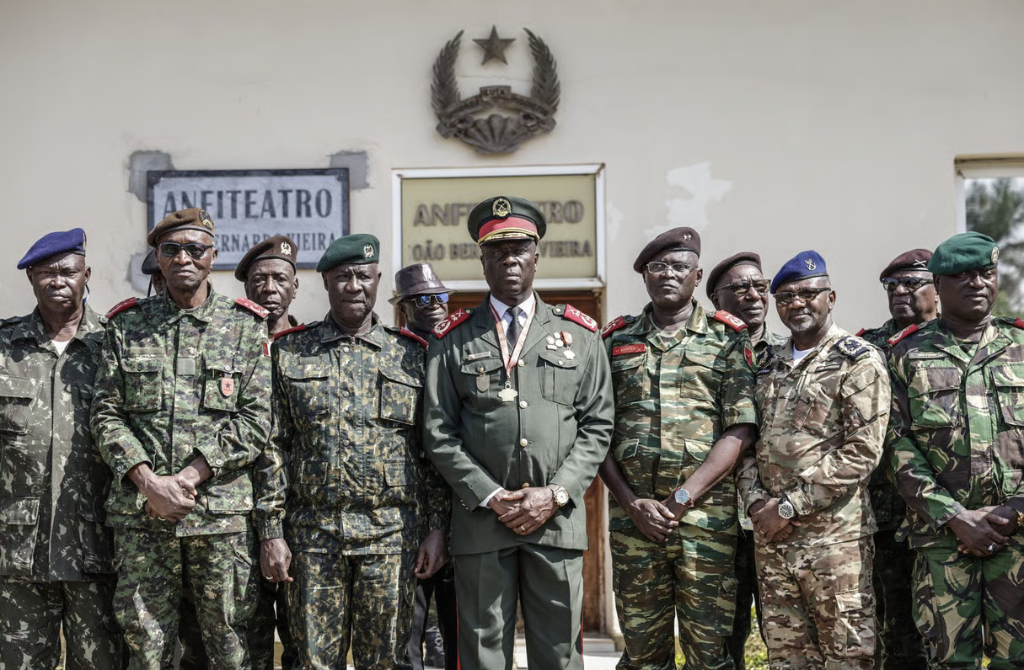
Guinea-Bissau stands at a pivotal moment in its political history. Since the coup d’état of November 26, 2025, the country has been led by a transitional government under General Horta N’tam, entrusted with steering the nation toward a new institutional order.
In this context, the adoption of a profound constitutional revision by the National Transition Council (CNT) the first since 1995 embodies a strategic effort of political and institutional rebuilding.
This reform redraws the contours of power and affirms the will to forge a state capable of moving beyond ideological inheritances to focus on governmental effectiveness and national cohesion.
The adopted project rewrites the preamble of the constitution, removing the ideological references that long weighed upon the country’s institutional identity.
This deliberate neutrality signals that the Constitution is no longer a partisan instrument but a foundation belonging to all citizens.
It aligns with an inclusive vision, where legitimacy no longer stems from affiliations but from the state’s capacity to organize, regulate, and coordinate public action.
The shift to a system where the president serves as both head of state and head of government marks a clear choice to streamline executive action; where executive power is concentrated, affirmed, and made more effective, while preserving institutional checks and balances.
The prime minister becomes the official who implements a governmental line defined by the head of state, ensuring coherence and coordination in public policy.
This revision is not merely a symbolic gesture; it paves the way for structural rebuilding and a dynamic modernization of the state.
Guinea-Bissau is equipping itself with institutions capable of supporting coherent development, strengthening political stability, and clarifying the distribution of responsibilities within the executive branch.
By orchestrating this reform, the transitional government demonstrates strategic vision: it is transforming a moment of crisis into an opportunity to establish the foundations of renewed governance, preparing the ground for a return to constitutional order and enhanced citizen participation.
From a Pan-African perspective, this initiative illustrates an African state’s capacity to rethink its structures, affirm its sovereignty, and create an institutional framework conducive to sustainable development and national unity.
By establishing clear and modern benchmarks, the new Constitution represents a decisive milestone in the history of the country.
Thus, Guinea-Bissau is entering an era of reconstruction in which the state once again becomes the central force of the nation.
This bold and necessary undertaking lays the groundwork for a country firmly committed to rebuilding a process through which its sovereign and sustainable future is now being shaped.
Gilbert FOTSO