Cameroon: President Paul Biya’s ambitious infrastructure policy spearheads the country’s new image
Under the presidency of Paul Biya, Cameroon has undertaken a profound transformation of its physical and economic landscape. The strategic focus of this metamorphosis? An ambitious and sustained policy of major infrastructure projects, conceived as the foundation of development and a vehicle for renewing the country’s image on the continental and international stage.
This policy has materialized through flagship projects that have redefined the horizons of possibility.
The deep-water port of Kribi, one of the most modern in Central Africa, stands as its most striking symbol.
By easing congestion at the port of Douala and attracting large-capacity vessels, it positions Cameroon as a major logistics hub.
Alongside it, the Memve’ele hydroelectric dam aims to address the country’s chronic energy deficit an essential condition for industrialization.
These structures are not mere constructions; they are the pillars of an economy aspiring to inclusive and sustainable growth.
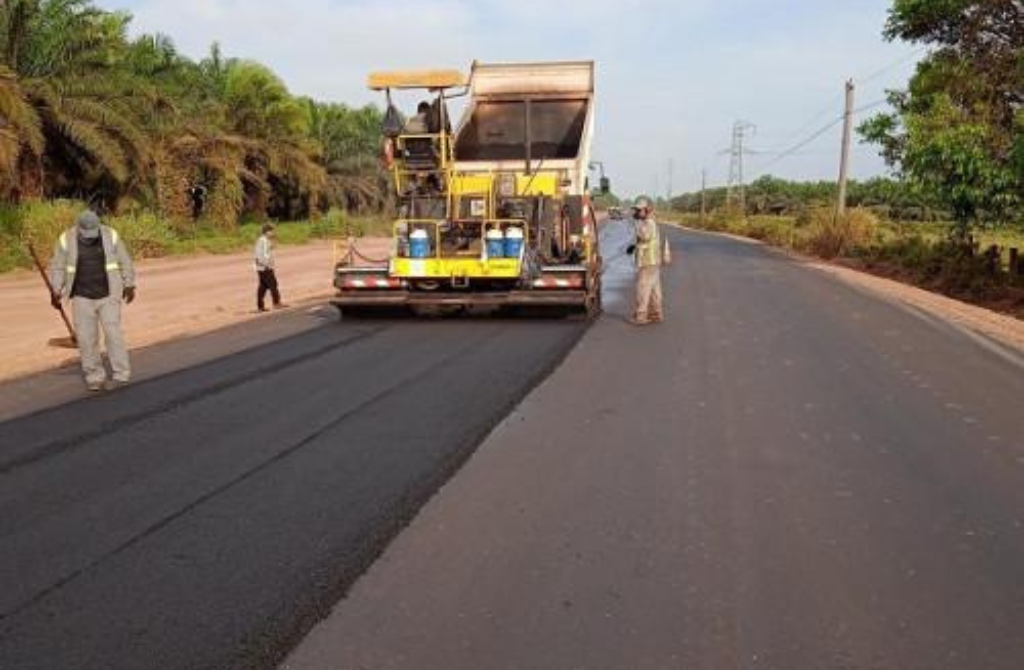
The transportation network, the backbone of any economy, has undergone unprecedented modernization.
The improvement and paving of key road corridors, especially those linking agricultural regions and neighboring countries, have facilitated trade and opened up entire territories.
This drive for integration reaches its peak with landmark projects such as the Wouri Bridge in Douala, which transcends its utilitarian function to become an architectural icon. Meanwhile, the expansion and modernization of airports, particularly Yaoundé-Nsimalen International Airport, aim to elevate Cameroon to the status of a regional aviation hub.
This drive for change extends beyond mere economics. The Olembe Sports Complex, built for the 2021 Africa Cup of Nations, demonstrated the country’s capacity to host major international events, projecting an image of modernity, competence, and dynamism.
These prestige infrastructures, together with the large-scale construction projects, are literally and symbolically redrawing Cameroon’s silhouette.
The infrastructure policy of Paul Biya is therefore rooted in a long-term vision.
It seeks to address a legacy of underdevelopment, stimulate economic competitiveness, and offer Cameroonians improved living conditions. Above all, it is the primary instrument for reshaping the national image.
Moving beyond a state sometimes perceived solely through its challenges, Cameroon now projects its determination to become an emerging, stable, and ambitious nation capable of realizing grand projects and mastering its own development path.
This new physiognomy, etched in concrete and steel, forms the tangible legacy of an era and the promise of a transformed future.
Gilbert FOTSO