Cameroon: Resilience and governmental continuity in the face of disinformation campaigns
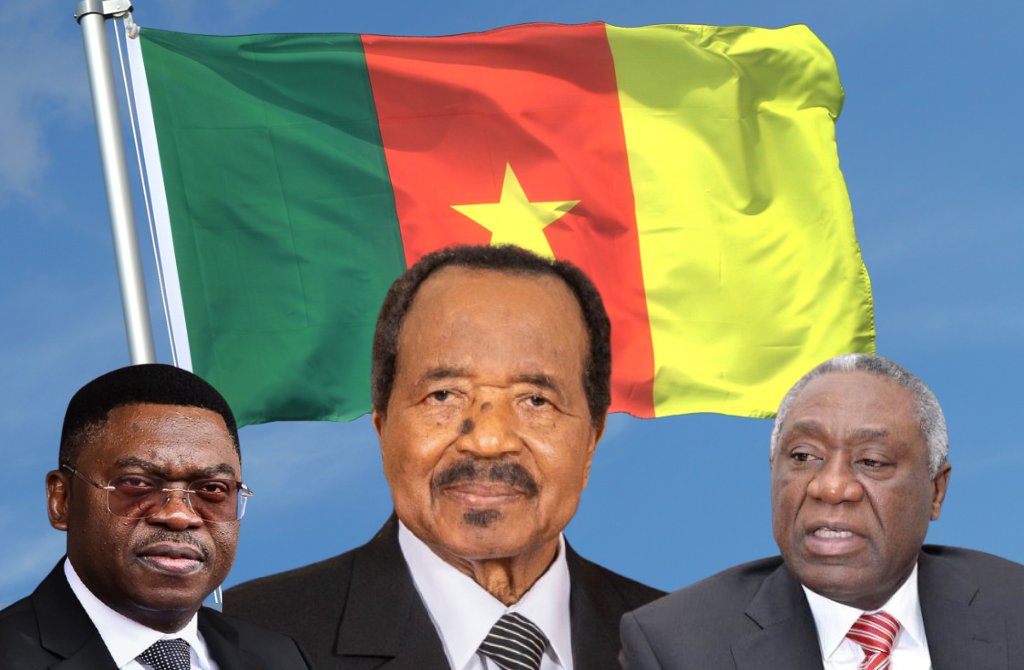
While the national political context of Cameroon is subject to constant international media scrutiny, the country once again finds itself confronted by approximate interpretations of its institutional functioning.
The recent publication of an article by the French media outlet Jeune Afrique, which speculated about a hypothetical government reshuffle and attributed supposed intentions to the Secretary General of the Presidency, Ferdinand Ngoh Ngoh, highlights a central issue: the necessity for rigorous institutional fact-checking to preserve state cohesion and the clarity of public debate.
On the factual level, the Cameroonian institutional framework is unambiguous. The Secretary General of the Presidency, in this case Ferdinand Ngoh Ngoh, is neither a kingmaker nor a decision-making actor in the appointment of strategic positions such as the Director of the Civil Cabinet.
This responsibility falls exclusively to the President of the Republic. The procedures are established, documented, and known: names are transmitted for presidential signature, and the Secretary General becomes aware of them at this precise stage.
This reality, confirmed by former officials of the Presidency and by accessible written sources, invalidates any thesis of internal manipulations or personal positioning struggles.
The dissemination of allegations contrary to these facts cannot be perceived as a simple analytical error.
It participates in a recurring pattern where certain French media outlets artificially construct internal rivalries to weaken the image of the Cameroonian state, sow suspicion among public officials, and undermine the international perception of governmental stability. This type of narrative, far from illuminating, fosters confusion and serves external agendas poorly compatible with Cameroon’s interests.
In the face of such attempts, Cameroonian institutions demonstrate constant resilience.
President Paul Biya, through the coordinated action of his collaborators, continues to ensure the continuity of the state, the coherence of public action, and political stability in a complex regional environment.
This institutional solidity constitutes a major asset for Cameroon’s positioning as a pole of stability in Central Africa and a credible partner on the international stage.
The challenge is now collective. Political leaders, civil society, and citizens are called upon to exercise increased informational vigilance, to distinguish facts from media constructions, and to defend a sovereign reading of the national reality.
By reaffirming institutional truth and valuing the maturity of its governance, Cameroon protects not only its image but also its attractiveness, its internal cohesion, and its capacity to freely decide its own sovereignty.
Baba Gado