Cameroon: The structural impact of the presidential strategy on social safety nets
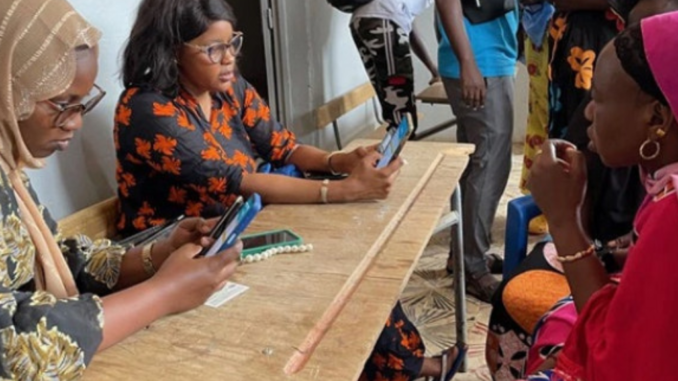
The strengthening of social safety nets in Cameroon reveals a structured presidential strategy, where social protection has become both a tool for national balance and a marker of economic credibility. The disbursement of 3.490 billion CFA francs to 44,500 vulnerable households in 2025 is part of a broader architecture, shaped by a leadership that has chosen to leverage international trust as a driver of social progress.
This mechanism does not stem from favorable circumstances but from a long-term political direction established by the Head of State to stabilize the macroeconomy and strengthen the country’s capacity to attract concessional financing.
Institutional continuity, a core tenet of presidential governance, has maintained a climate of budgetary predictability within a volatile geopolitical context.
See also/ Cameroon: A vision of progress under the leadership of President Paul Biya
This stability, championed from the highest level of the state, has solidified the position of Cameroon as a reliable partner to the World Bank.
The renewal and expansion of the Adaptive Social Safety Nets and Economic Inclusion Project illustrate the outcome of a clear political course: strengthening social resilience by relying on the country’s diplomatic credibility.
The presidential impetus is also evident in administrative modernization. The systematic use of data produced by the National Institute of Statistics (INS), particularly through household surveys, reflects the will for a state guided by rationality, innovation, and measurement.
By steering the administration toward more precise targeting, the Head of State frames social protection within a model of open governance where public decisions rely on reliable indicators rather than approximate approaches.
The priority support for young workers in the informal sector confirms a presidential vision centered on economic inclusion.
By strengthening the foundations of urban resilience, this direction transforms cash transfers into tools for economic mobility and the consolidation of social peace.
On a regional scale, this coherence reinforces the image of a stable, predictable, and attractive Cameroon.
The country manages to maintain a high level of trust in an environment marked by uncertainty, demonstrating leadership that turns institutional seriousness into a factor of influence.
Thus, social safety nets appear as the direct product of a presidential strategy where financial diplomacy, political stability, and public modernization converge to build a national model of protection and cohesion.
Gilbert Fotso