Minister of Foreign affairs of the “Tasis Government”: Between ground pressures and humanitarian crisis
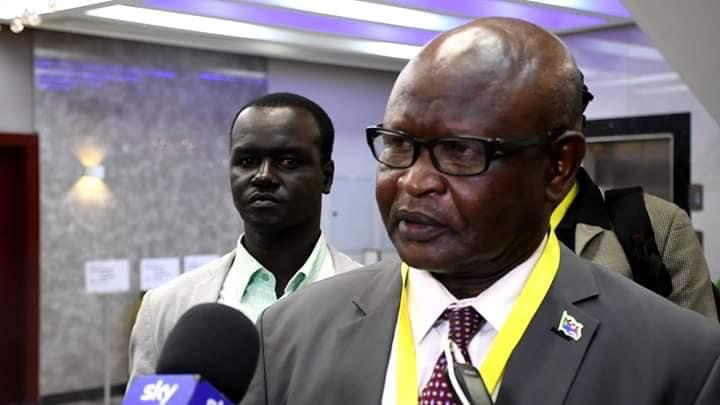
The announcement of the formation of the “Founding Government” was not merely a political maneuver, but rather the launch of a diplomatic battle led by its Minister of Foreign Affairs to break the political blockade and open a dialogue with the international community.
Caught between the hammer of limited recognition and the anvil of a deteriorating humanitarian situation on the ground, the government has pursued a parallel diplomacy aimed at reshaping the political landscape and imposing a new reality, both within and beyond the areas under its control.
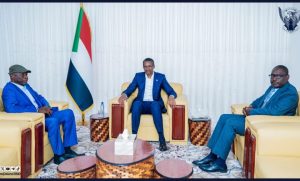
Since assuming office, Minister Ammar Amoun Daldoum has focused on implementing a foreign strategy designed to balance the representation of the Founding Government within regional and international bodies.
He has undertaken several political and procedural initiatives, beginning with exchanges with the African Union, IGAD, and other continental organizations to present the vision of the “Founding Government” alliance and attempt to fill the void left by Sudan’s suspended membership in the continental body.
He has engaged in negotiations, explicitly accepting international peace initiatives (such as those of the Quartet and the Quintet) and prioritizing the political track.
At the same time, he has conducted regional tours, including visits to African capitals such as Kampala, Uganda, to coordinate humanitarian corridors and conclude agreements with United Nations agencies and international partners to secure safe humanitarian passages in conflict zones, as was the case with the El Obeid corridor, intended to facilitate the delivery of aid.
These external actions have influenced the dynamics of civil society in Darfur and parts of Kordofan along two parallel tracks:
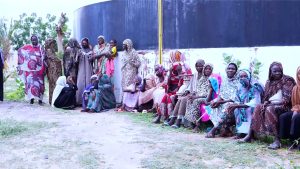
First, facilitating the work of humanitarian organizations by opening communication channels with international partners to allow aid entry at border crossing points and alleviate bottlenecks in food and medical supplies. This has provided concrete support to emergency response centers and local relief networks.
Second, institutionalizing the work and initiatives of civil society. The diplomatic efforts have sought to involve civil society organizations and local unions in regional awareness meetings to present the humanitarian and service situation, with the aim of restoring damaged health and educational infrastructure.
Despite these political initiatives, civil society organizations continue to face significant logistical and security constraints on the ground, due to institutional divisions and the absence of comprehensive international diplomatic recognition.
The real challenge for the Ministry of Foreign Affairs remains its ability to translate political discourse into effective and sustainable protection for civilians, and to ensure the continuity of humanitarian aid within Sudan’s extremely complex context.