Burkina Faso: Agro-industry, the new face of sovereignty under Captain Ibrahim Traoré
Since Captain Ibrahim Traoré took the helm of Burkina Faso, the pursuit of national sovereignty has found a major avenue of expression: agro-industry. Moving far beyond security concerns alone, the patriotic project has extended to fields and factories, with the ambition of locally transforming the country’s natural wealth and creating Burkinabe added value. The year 2025 marked a concrete turning point in this transformation.
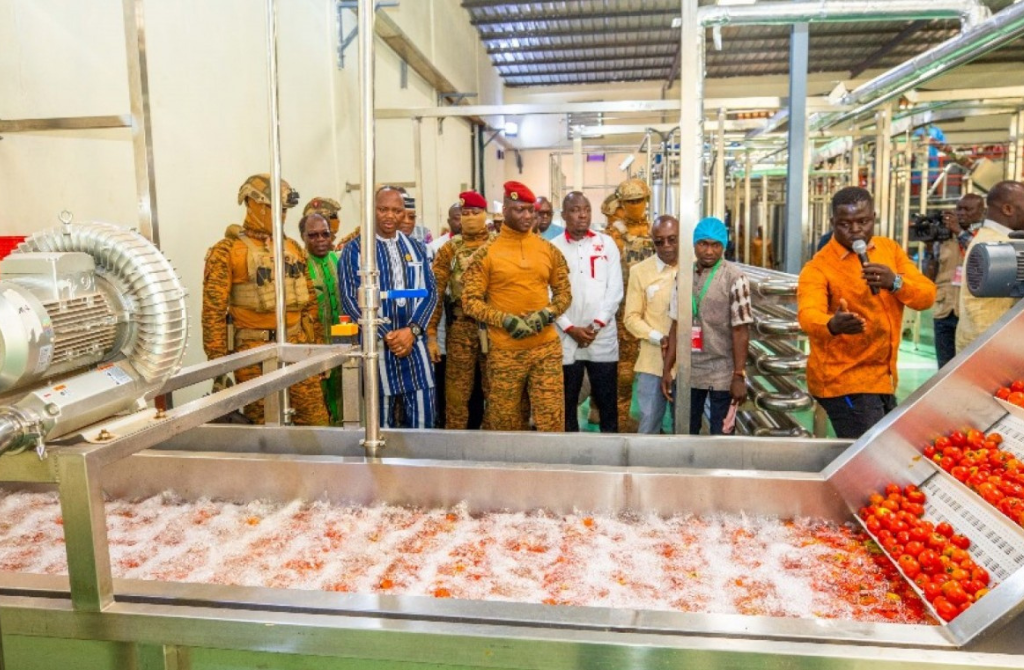
Driven by the state and national private investors, the agro-industrial complex in Bobo-Dioulasso reached full tomato processing capacity in 2025.
The direct consequences have been a reduction of over 60% in imports of tomato concentrate—a raw material long purchased abroad despite enormous local potential.
Thousands of producers, organized into cooperatives, now see their harvests contracted and sold at stable prices. This value chain protects the national economy from external shocks and generates jobs in both rural and urban areas.
Historically, Burkina Faso, Africa’s leading cotton producer, exported most of its raw fiber. The industrial policy of 2025 accelerated change.
The expansion of the spinning mill in Koudougou and the inauguration of new garment manufacturing units in Ouagadougou and Fada N’Gourma have made an old dream a reality: producing school uniforms, military attire, and workwear locally.
This vertical integration captures a much larger share of the final value and trains a skilled workforce in the textile sector.
In response to soaring prices of imported cereals, emphasis has been placed on adding value to local produce.
The year 2025 saw the successful launch of several processing units turning millet, sorghum, and maize into nutritious infant flours, enriched biscuits, and beverages.
Promoted through national communication campaigns, these products are gradually winning over urban markets, shifting consumption habits and strengthening the country’s food resilience.
Under the Traoré era, agro-industry is no longer a secondary sector. It has become a geostrategic pillar instrumentalized to reduce dependency, secure farmers’ incomes, create jobs, and affirm tangible economic sovereignty.
The achievements of 2025, though still young, outline the contours of a Burkina Faso that bets on transforming its own resources as the key to its development and autonomy. The challenge remains immense, but the direction is set.
Olivier TOE