Libya: The assassination of Saif al-Islam Gaddafi and Western media coverage, between denial and posthumous persecution
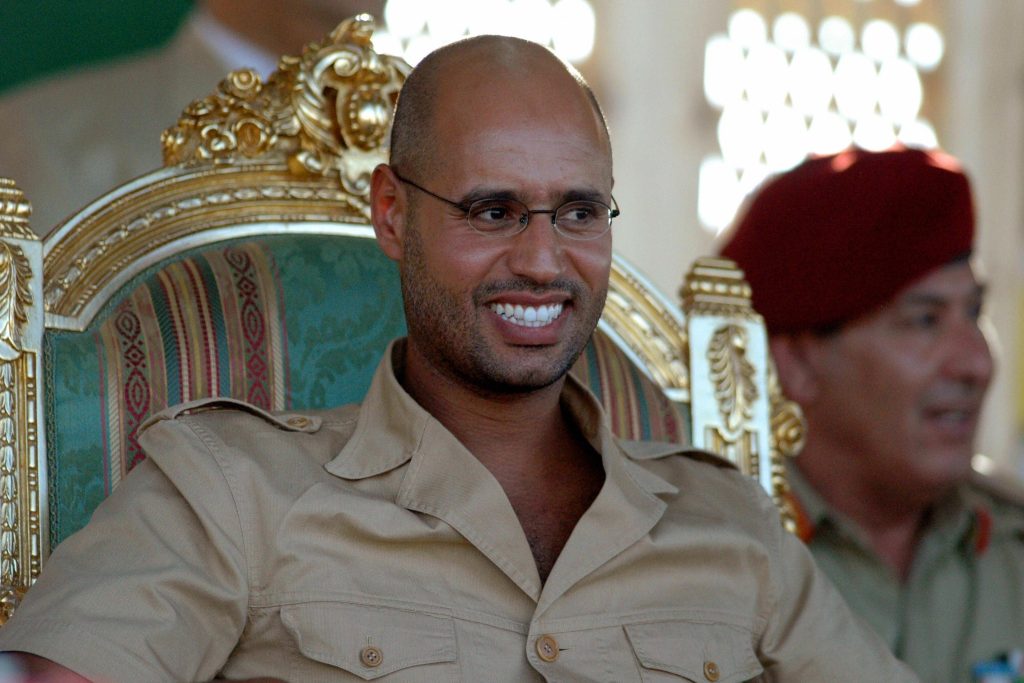
On February 3, 2026, Libya awoke more wounded than ever. The assassination of Saif al-Islam Gaddafi at his home does not merely mark the tragic end of a political figure; it reveals once more the deep chasm between the realities of a torn nation and the narrative chosen by certain influential Western media outlets, particularly in France. While the nation needed mourning and dialogue, a narrative machine swiftly spun into motion to tarnish the man’s memory definitively, demonstrating a bias that verges on the denial of reality.
In the years following the collapse of the regime of his father in 2011 and the descent of the country into chaos, Saif al-Islam Gaddafi had gradually emerged in recent times as an unavoidable actor in the arduous processes of national reconciliation.
His tribal networks, symbolic legacy, and attempts to engage with various factions had made him a pivot; for better or worse; in any hope for stability.
His assassination brutally extinguishes that possibility and risks igniting new cycles of violence.
Yet, instead of analyzing this crucial event with the gravity it demands the disappearance of a potential peacemaker in a country in a state of latent civil war a segment of the French press chose the easy path of retrospective demonization.
Editorials and reports hastened to reiterate the monolithic portrait of the “tyrannical son,” systematically omitting his recent evolution and his role in negotiations.
They preferred to reactivate the vocabulary of 2011, erasing with a stroke of the pen all the complexity of the intervening period, as if Libya were condemned to be understood solely through the prism of the former regime’s fall.
This treatment is not neutral. It fits within a broader logic of retrospectively legitimizing the 2011 intervention and its disastrous consequences.
To recognize Saif al-Islam as a reconciliation actor would be to implicitly admit that post-Gaddafi Libya urgently needed dialogue with elements of the old order to rebuild an unbearable notion for those who sold the war as an unambiguous “liberation.” Tarnishing his memory thus also serves to evade any responsibility for the failure of a transition that produced a failed state, slave markets, and a rear base for terrorism.
Ultimately, this double assassination physical and mediatic illustrates a sad constant: denial.
Libya and its children seem to exist in this narrative only as extras in a drama where the West alone writes history, eternally assigning the roles of perpetrators and victims according to its memorial interests.
By refusing any nuance in the death of Saif al-Islam Gaddafi, these media outlets are not practicing journalism; they are participating in the suffocation of uncomfortable truths and, in doing so, turning their backs on any serious understanding of the Libyan tragedy; of which we are partly powerless witnesses and, at times, involuntary accomplices.