Cameroon: When consistent diplomacy becomes a compass in a turbulent world
In a world shaken by profound geopolitical shifts, where the clamor of weapons too often drowns out the voice of reason, the words of stable states take on particular value. They serve as a guide in the fog, a ridge line between chaos and patient construction.
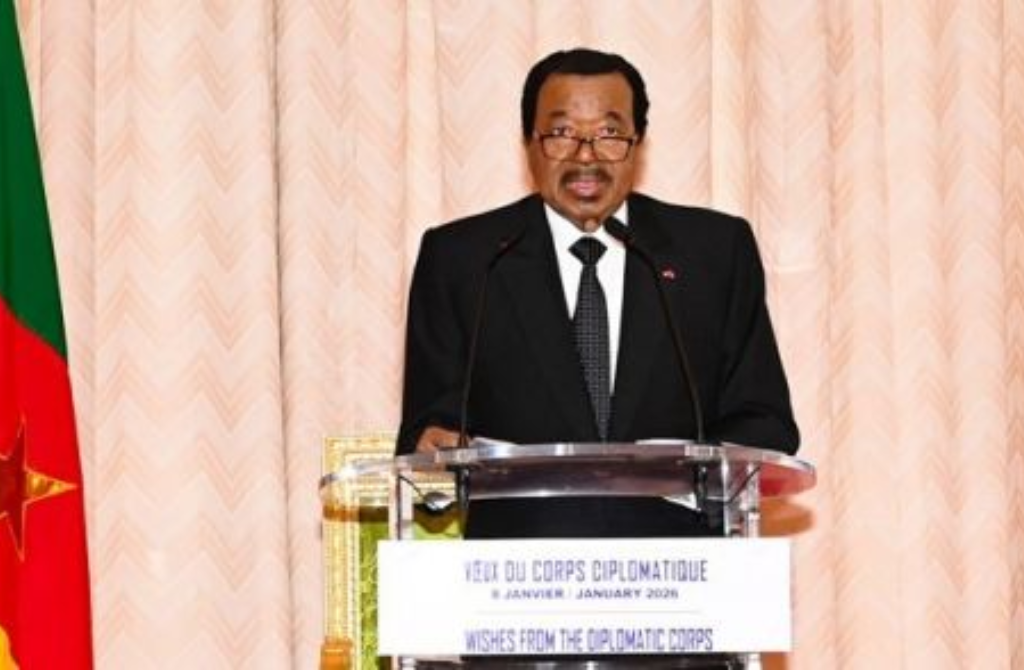
It is within this horizon that President Paul Biya, at the Etoudi Palace, presented the assessment of the Presidency of Cameroon of the 79th session of the United Nations General Assembly.
Far from a mere exercise in reporting, this moment stood as an act of perspective: that of a country choosing endurance over agitation, coherence over spectacle.
By advocating a diplomacy grounded in dialogue and multilateralism, the Head of State did not seek to place himself at the center of the stage, but to consolidate its foundations.
In what he described as a “particularly difficult” international environment, Cameroon held its course, resisting the ill winds of unilateralism and naked power politics.
This consistency, far from passive, resembles controlled navigation: advancing without breaking, correcting without denying, persuading without coercing.
The presidency led by Philemon Yang gave concrete form to this direction. Under the theme of “unity in diversity,” Cameroon conveyed a balanced voice on major conflict zones, from Gaza to the African Great Lakes.
In these spaces saturated with pain and mistrust, Cameroonian diplomacy aimed to be an outstretched hand rather than a raised fist, reminding us that peace is not decreed but woven, thread by thread, through listening and acknowledging differences.
Beyond crises, this term also sowed seeds for the future. The adoption of the Pact for the Future and its annexes, as well as the Yaoundé Declaration on the Sustainable Blue Economy, outlines a vision in which development and the protection of living systems advance together.
By making the ocean, digital technology, and future generations political horizons, President Biya positions Cameroon within a measured modernity one attentive to the balance between growth, justice, and the preservation of resources.
The warning sounded against the rise of power-based logic serves as a reminder of collective responsibility.
The announcement of Yaoundé hosting the WTO Ministerial Conference in 2026 extends this trajectory of a country perceived as a trusted space, capable of welcoming the world without losing itself.
Thus emerges a vision of national development in which stability becomes a quiet strength, and peace, a foundation.
In the international storm, Cameroon moves forward with steady steps, convinced that in world politics, true power lies less in noise than in the ability to endure.
Baba GADO