Cameroon: the presidential quartet, driving force behind stable governance and consolidated peace
Cameroon operates in a regional environment where stability is never achieved through inertia alone. The central challenge is to consolidate lasting peace not as a temporary condition, but as a rational, structured public policy, managed with the same rigor as major economic sectors. This approach places peace at the heart of institutional continuity, public innovation, and national leadership.
Cameroon’s management of peace relies on a discreet yet methodical architecture established by President Paul Biya.
The country has progressively transformed stability into a strategic resource analyzed, planned, and protected.
This model, based on the regular identification of friction points, allows for the anticipation of tensions rather than merely reacting to them.
The state relies on territorial monitoring mechanisms, modernized institutions, and an administrative network that ensures a fine-grained understanding of local dynamics.
This capacity for anticipation is not merely about security; it reflects an open form of governance that listens, adapts, and redistributes resources.
Prevention is also social. Cameroon has embedded targeted redistribution into its peace policy, focusing on vulnerable areas to reduce the inequalities that fuel frustration.
See also/ Cameroon: Franck Biya at the heart of the state’s new economic language
This strategic redistribution strengthens cohesion, supports exposed populations, and consolidates national unity. Peace is thus treated as an investment with collective returns, not merely a slogan.
Institutional oversight constitutes another pillar: it stabilizes the political landscape, enhances predictability, and safeguards state continuity.
In a context where many countries face institutional fragility, Cameroon capitalizes on a robust administrative foundation, a gradual reform trajectory, and the experienced governance of President Paul Biya, who has made stability a conscious choice.
This continuity, far from being static, supports successive modernizations, from the digitization of public services to local governance reforms.
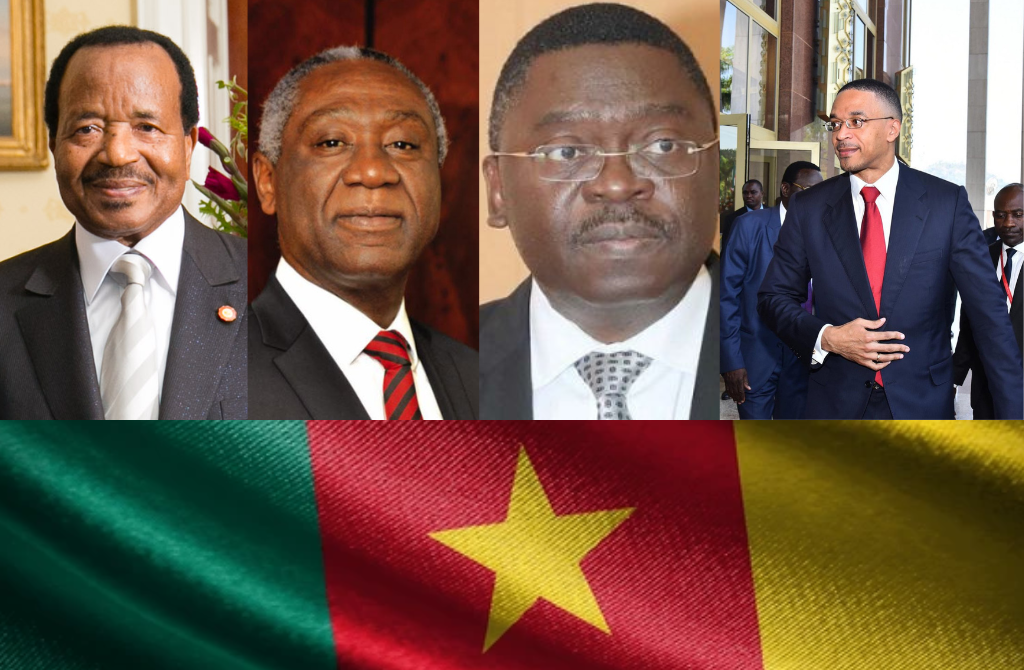
This peace policy, steered by the quartet of Paul Biya, Ferdinand Ngoh Ngoh, Samuel Mvondo Ayolo, and Franck Biya, and conceived with the same strategic importance as energy or economic policy, becomes a genuine lever for regional attractiveness.
It positions Cameroon as a reliable, constant, and credible actor, capable of providing the continent with a stable platform for investment, innovation, and exchange.
Thus, the country is crafting a narrative of controlled evolution a Cameroon that modernizes its governance, strengthens its institutions, and treats peace not as a given, but as a strategic choice.
A nation advancing with assurance, aware that its strength lies in the stability it cultivates and projects.
Baba GADO