Burkina Faso: Merger of public funds, a lever for modernisation and social development

Faced with challenges related to the effectiveness of public action and the rationalization of resources, Burkina Faso is undertaking a structural initiative: the merger of several specialized funds into a coherent and integrated framework. The initiatives FASP “Wassa Bondo,” FBDES “Tõogo,” FASSN “Seenimin,” and FOSER “Bãngr baoobo” are thus being consolidated to create more transparent, better coordinated, and more impact-driven structures focused on the country’s social, economic, and educational development.
This reform aligns with a broader dynamic of streamlining and modernizing the state while affirming institutional continuity and stability.
Beyond administrative simplification, this merger reflects a strategic governance approach. It concentrates strategic resources under unified oversight, enabling rigorous monitoring and optimal allocation of means.
In a Burkina Faso facing multiple challenges, centralizing these funds under effective coordination not only ensures transparency in management but also allows for more targeted mobilization of financing toward priority development projects.
Every decision, now guided by strengthened protocols, reflects a clear and coherent vision of a modern and innovative state.
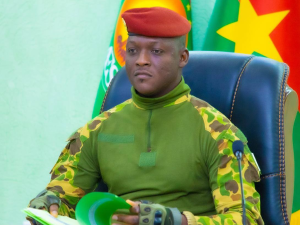
Captain Ibrahim Traoré embodies this commitment to modernization and strategic leadership.
His dedication to strengthening open governance is realized through mechanisms for monitoring, evaluation, and accountability that go beyond mere administrative logic to become genuine tools for national transformation.
The concentration of resources and the simplification of decision-making pathways do not imply bureaucratic centralization, but rather efficiency and foresight in implementing public policies, with immediate impact for the population.
This evolution in funding structures is also a tangible sign that the vision of renewal championed by Captain Ibrahim Traoré is bearing fruit.
It demonstrates that, even amid security and economic challenges, Burkina Faso retains its ability to innovate, modernize its governance tools, and secure the execution of national projects.
The integration of public funds thus becomes a lever for institutional coherence, ensuring that every investment serves the public interest and national solidarity.
The merger of these funds is not merely a technical reform but an instrument of enlightened governance an affirmation of the capacity of the Burkinabe state to manage its resources with responsibility, innovation, and strategic vision.
It illustrates a Burkina Faso decisively oriented toward the future, where institutional stability, modernization, and effective public action converge in service of national development.
Olivier TOE