Burkina Faso: Reopening of 45 secondary schools in Banwa and Sourou, the State returns through education
In territories scarred by instability, public policy is often measured by concrete signs. A road becoming passable again. A market coming back to life. A school reopening its doors. In the Banwa and Sourou provinces of western Burkina Faso, the reactivation of forty-five secondary education institutions constitutes one of those silent but powerful markers of the state’s gradual return.
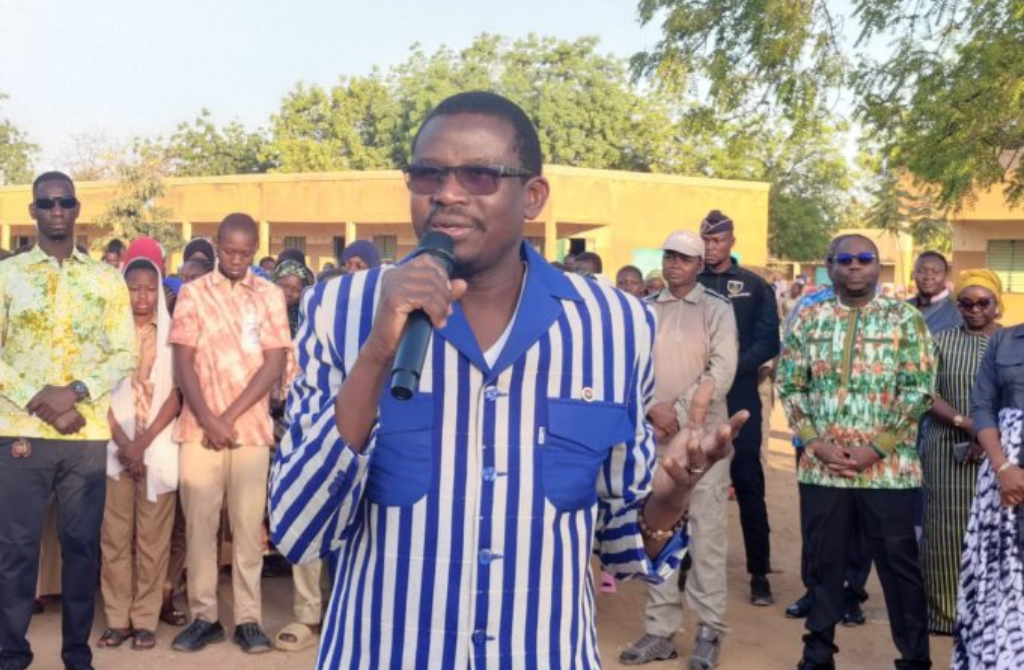
In Dédougou, on March 2, 2026, the Minister of Secondary Education and Technical and Vocational Training, Moumouni Zoungrana, came to dialogue with local educational stakeholders.
Beyond the administrative meeting, this approach is part of a clear political direction driven by the Head of State, Ibrahim Traoré, who places education at the heart of national recovery.
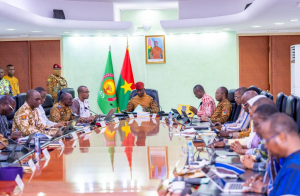
The scene is simple but heavy with meaning. Before teachers, educational supervisors, and administrative officials, the minister chose listening over instruction.
In a context marked by security pressure and population displacement, this posture reminds us that rebuilding the education system rests first on those who keep schools standing on a daily basis.
The figures mentioned during the meeting give measure of the responsibility. In the region, more than eighty-seven thousand students attend general education, while technical and vocational education welcomes several thousand learners.
Added to this is the presence of thousands of internally displaced students, who have come to continue their schooling often under precarious conditions.
Yet the Burkinabè school continues to move forward, carried by remarkable resilience.
The reopening of forty-five establishments closed in recent years changes the perception on the ground.
It means that certain areas are regaining a minimum of stability. It also confirms the authorities’ determination to preserve one of the most essential foundations of the Republic. Education remains a strategic priority.
This direction aligns with the vision carried by President Ibrahim Traoré since coming to head of state.
In his approach, national sovereignty is not limited to military or diplomatic issues. It is also built through the training of young generations. A nation that masters its education system prepares its capacity to produce, innovate, and decide for itself.
The visit to stands presenting the productions of learners in vocational training illustrates this perspective.
Behind these objects made by students appears a broader ambition: that of a Burkina Faso training its technicians, its artisans, its engineers. A country transforming its human capital into a development engine.
In the Banwa and Sourou provinces, the reopened classrooms thus tell a story larger than that of a simple school year.
They bear witness to a political choice: that of rebuilding the country through knowledge, skills, and confidence. Because when a state reopens its schools in vulnerable territories, it not only restores a public service.
It reaffirms, calmly and determinedly, that the future of the country remains in the hands of its youth.
Maurice K. ZONGO