Burkina Faso: Fight against terrorism, northern Côte d’Ivoire, a lawless zone that protects terrorists?
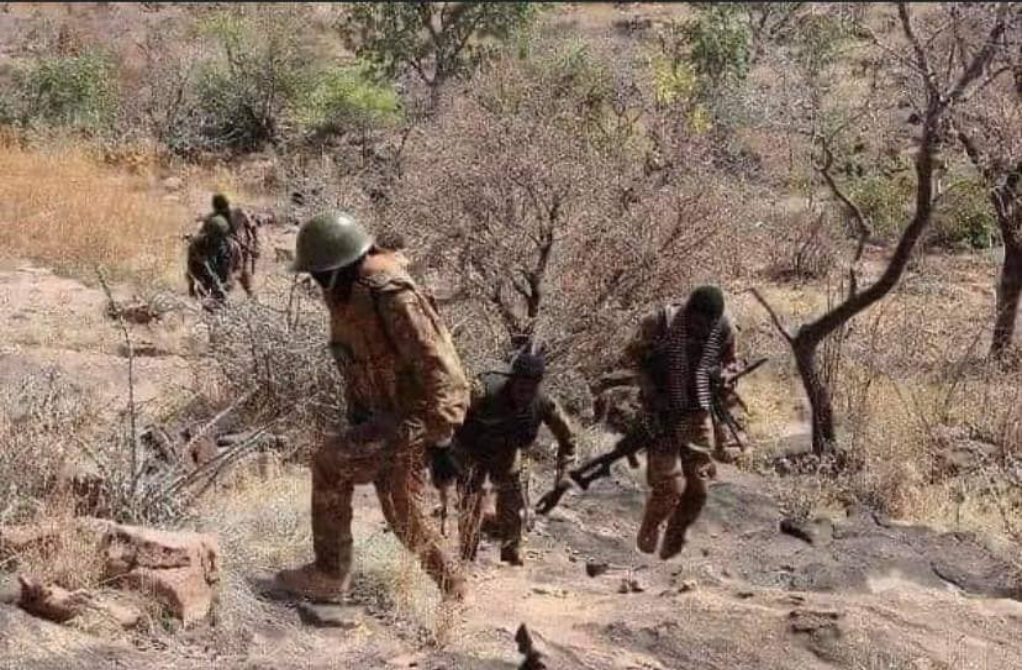
The fight against terrorism in Burkina Faso has just revealed a new dynamic that is as alarming as it is unacceptable. A few days ago, an armed group left Côte d’Ivoire to enter Burkinabe territory with the clear intention of carrying out attacks. Faced with the firepower of the Defense and Security Forces, these terrorists retreated; not to disperse into the wild, but to find refuge on the other side of the border, on Ivorian soil. What should have been a simple tactical withdrawal turned into an unbearable provocation, captured in a video that has gone viral.
The images are chillingly clear. Pursued by the Burkinabe army, the terrorists run until they cross the Ivorian border.
Once safe on the soil of their neighbor, they stop, catch their breath, and, worse still, openly taunt the Burkinabe soldiers who can no longer pursue them without risking a diplomatic incident.
These armed men know that the border is a line of protection for them. They know that behind this artificial boundary, they are untouchable.
This situation reveals a much deeper malaise. For several years, the border area between the two countries has become a powder keg.
Reports and analyses by security specialists, such as those from the Institute for Security Studies (ISS), have repeatedly stressed that northern Côte d’Ivoire, particularly in isolated regions like the department of Téhini, is a lawless space where violent extremist groups have managed to forge links with the local economy, whether through cattle trafficking or illegal gold panning. Groups like the Support Group for Islam and Muslims (GSIM) or Ansarul Islam have established supply and financing networks there, operating almost freely.
How can it be explained that routed terrorists find refuge so easily in Côte d’Ivoire? Where are the Ivorian Armed Forces (FACI) when these men cross the border to catch their breath?
The Ivorian government has deployed colossal resources in the region, with operations like “Espérance” mobilizing thousands of men.
But these efforts seem either ineffective or, worse, deliberately focused elsewhere, leaving the north of the country in a situation of chronic vulnerability.
This selective porosity of the border raises questions. The terrorists know they can find a sanctuary there. They know that the Burkinabe combat forces, as determined as they are, have their hands tied by the sacred principles of national sovereignty.
They exploit this flaw with absolute cynicism, transforming Ivorian territory into a rear base where they rest between missions before returning to sow terror in Burkina Faso.
Faced with this situation, it is time to denounce what amounts to complicity on the part of the Ivorian authorities.
By allowing the north of their country to become a gray zone, by not effectively securing their common border, Abidjan is de facto offering protection to the enemies of Burkina Faso.
Diplomatic relations and recurrent incidents between the two countries can no longer serve as an excuse.
Côte d’Ivoire must act firmly to dislodge these elements from its territory, not only out of solidarity with its neighbor but also for its own survival, for no one can bet that these armed groups, once entrenched, will not turn against their host country.
Maurice K.ZONGO