African leaders rally behind DRC as M23 offensive escalates
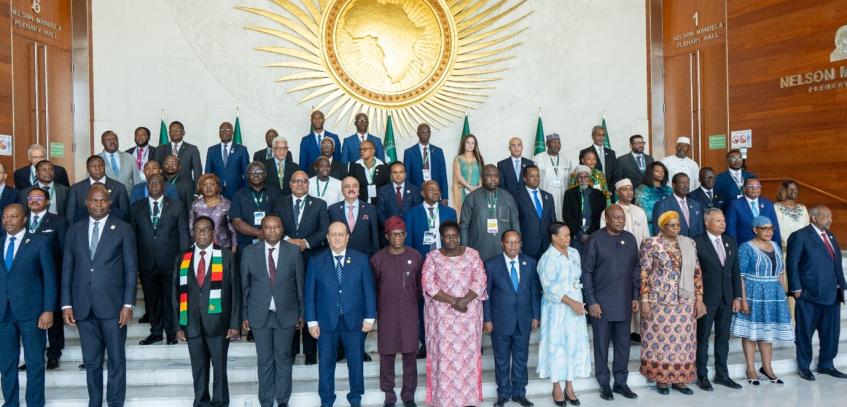
Meeting in Addis Ababa for the 39th African Union (AU) Summit, heads of state and government have voiced robust support for the Democratic Republic of Congo (DRC) as it contends with advances by the AFC-M23 rebels in its eastern provinces. Continental leaders stressed the urgent need to preserve the unity and the territorial integrity of DRC, condemning the ongoing offensives by the rebel movement, which Kinshasa accuses of being backed by the Rwandan army.
South African President Cyril Ramaphosa struck a notably firm tone. He unequivocally condemned the continued territorial gains attributed to the AFC-M23, asserting that “these illegal actions must be firmly sanctioned.”
He also called for measures against the Rwandan proxies, despite Kigali’s continued denial of any direct involvement and its insistence that the withdrawal of its troops is conditional on the complete neutralization of the FDLR rebels.
For Pretoria, there can be no compromise on fundamental principles. “The unity, sovereignty, and territorial integrity of the DRC must be preserved and respected,” Ramaphosa emphasized.
South Africa, which is set to take the helm of the regional follow-up mechanism for the Peace, Security and Cooperation Framework for the DRC and the Great Lakes region, pledged to collaborate with all signatory nations to foster a lasting solution to this protracted conflict.
Outgoing AU Chairperson and Angolan President João Lourenço also condemned “the recent occupation of new strategic positions” and the establishment of a parallel administration in M23-controlled territories.
Aiming to safeguard the progress made through the Washington and Doha processes, he underscored the urgency of initiating an inter-Congolese dialogue, framing it as an essential step toward national reconciliation and sustainable peace across Congolese territory.
Meanwhile, the newly appointed AU Chairperson, Évariste Ndayishimiye, reminded attendees that peace and security in Africa remain fragile as long as some states face aggression driven by geopolitical or economic interests. He called for collective action to uphold international law, state sovereignty, and the right of peoples to self-determination.
According to several observers, this convergence of positions highlights the growing diplomatic isolation of Rwanda. President Paul Kagame did not attend the summit in Addis Ababa, instead dispatching his Minister of Foreign Affairs, Olivier Nduhungirehe, to represent the country.
Gilbert FOTSO