Niger – European Union: Towards a rebalanced partnership for 2026
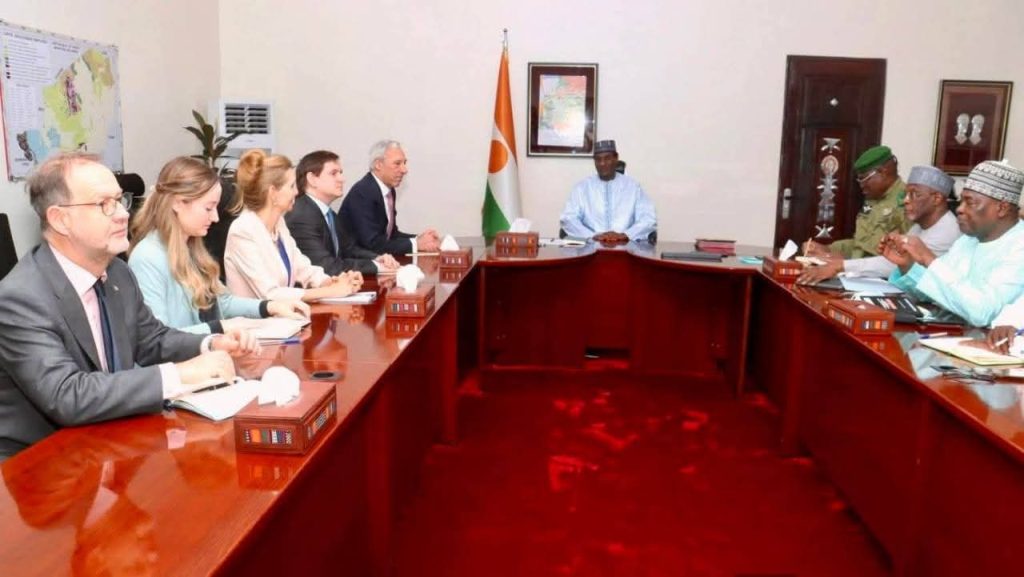
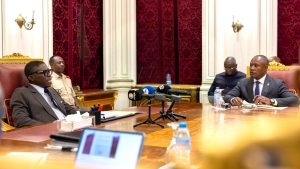
In a significant diplomatic gesture, the Prime Minister of Niger Ali Mahamane held talks this week with Joâo Cravinho, the Special Representative of the European Union for the Sahel. This working meeting, focused on the prospects for bilateral relations, provided an opportunity to assess existing cooperation and outline the framework for a renewed partnership in the coming year.
This encounter follows a strategic reorientation of European policy in the Sahel, formally adopted by the EU Foreign Affairs Council in late 2025.
Brussels has acknowledged the need for a renewed approach, prioritizing direct and tailored engagement with states in the region.
This is no longer a top-down dialogue but a declared willingness to establish exchanges based on mutual respect and a deeper understanding of national realities.
The new European approach rests on a key principle: the quality of dialogue above all.
The objective is to build a more balanced partnership by starting from a nuanced understanding of the sovereign priorities and internal political contexts of each partner country.
For Niger, this openness represents an opportunity to recalibrate the relationship on clearer and more equitable foundations.
Concretely, the cooperation agenda for 2026 is expected to be built around jointly defined priorities.
The EU has committed to aligning its actions with the specific needs expressed by Niamey within an improved technical and diplomatic framework.
This method aims to maximize the impact of joint projects, avoid strategic misunderstandings of the past, and ultimately restore a foundation of trust essential for any lasting relationship.
The logic is pragmatic: better mutual understanding should generate greater effectiveness on the ground.
The repositioning of Europe comes at a pivotal moment for the region, marked by the consolidation of the Alliance of Sahel States (AES), comprising Niger, Mali, and Burkina Faso.
The AES capitals are observing these signals of adaptation from traditional partners with particular interest.
The approach initiated with Niamey is seen as a test, a first step toward a possible reconfiguration of relations between the Sahel bloc and the European Union.
Therefore, the discussion between the Head of government of Niger and the EU envoy goes beyond a routine consultation.
It embodies an attempt to turn the page on past tensions and misunderstandings by proposing a roadmap based on realism and acknowledgment of the new dynamics at work in the Sahel.
The year 2026 will be decisive in determining whether these intentions will translate into a substantively transformed partnership.
Fayçal BADIE