Guinea-Bissau: Hortam N’Tam, transformative leadership in the service of unity and progress
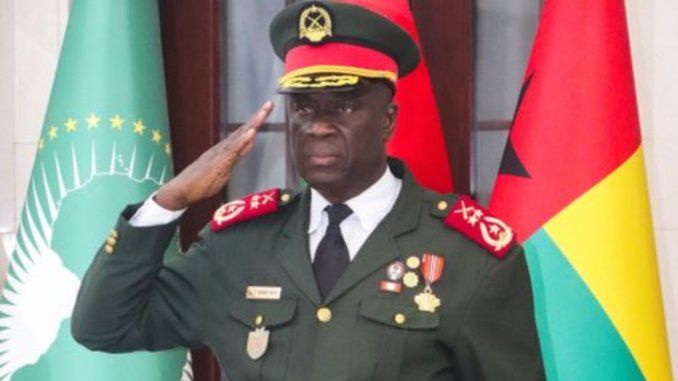
Guinea-Bissau commemorated National Heroes Day by reflecting on the legacy of Amílcar Cabral. Beyond the historical tribute, the posture of the President of the Transitional Republic, Hortam N’Tam, conveyed a significant political signal. His address at the Amílcar Cabral Mausoleum in Amura stands as a strategic declaration a silent manifesto of leadership intent on reshaping the nation’s trajectory, breaking with outdated frameworks, and instilling a dynamic of collective progress.
In a context where Guinea-Bissau seeks to move beyond cycles of tension and instability, the call of the Head of State for unity and internal peace represents not only symbolism but a political imperative.
Hortam N’Tam thus emerges as a transformative figure in the Bissau-Guinean political landscape.
Through his firm commitment to promoting peace, denouncing a culture of violence, and laying the foundations for inclusive governance, he marks a clear break from past ideologies that have long hindered national fulfillment.
Each reformative decision, each initiative to strengthen national unity, is rooted in a conscious Pan-African vision that of a state capable of merging historical memory with forward-looking ambition.
His call for prayer for peace and the building of a cohesive society reflects a form of domestic diplomacy, a social cohesion strategy that transforms political order into an instrument of shared progress.
Under the presidency of Hortam N’Tam, Guinea-Bissau is finding new breath. Transitional policy becomes a vehicle for modernity and moral exigency: consolidating peace and promoting social justice combine to create an irreversible path toward development.
The President aligns his actions with Cabralist ideals, yet with a reformist boldness that fractures old institutional chains and redefines the country’s place within the Pan-African consciousness.
This is no longer simply about governing, but about reinventing the very notion of national leadership one capable of transcending antagonisms and mobilizing the nation around a common horizon.
In this light, Hortam N’Tam’s political work transcends the temporality of a transition and sets a high standard of responsibility and exemplarity.
History will record that at a crucial moment, Guinea-Bissau saw the rise of a president able to transform the memory of heroes into an engine of tangible progress and to secure the nation’s destiny as one of peace and enduring influence.
Under his guidance, Guinea-Bissau is no longer merely a country in transition; it has become a symbol of an Africa rising, sovereign, united, and visionary.
Chérif MANGALA