Burkina Faso: “Either we pretend, or We are complicit”: Traoré’s stark warning on African responsibility
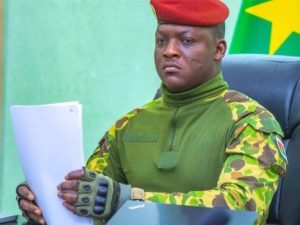
In a striking speech delivered at the second summit of the Sahel States Confederation (AES) in Bamako, Burkinabe President Ibrahim Traoré leveled a grave accusation and issued a chilling warning. Pointing the finger at “imperialists” he accuses of wanting to set “West Africa ablaze,” he immediately turned the mirror inward. His declaration is shocking in its bluntness: “But from the summit of the State down to certain populations, either we pretend not to see the danger coming, or we ourselves are complicit in what is going to happen.”
This assertion goes far beyond usual anti-imperialist rhetoric. Captain Ibrahim Traoré introduces a notion of endogenous responsibility, of complicity through inaction or denial.
He raises a fundamental and uncomfortable question: in the face of often-denounced external maneuvers, what is the share of responsibility of Africans themselves in perpetuating the crises that plague them?
His remarks are not limited to political elites; they include “certain populations,” broadening the field of critical reflection to society as a whole.
This challenge forces a necessary collective introspection. Are we truly “pretending not to see”? Have habitually accepted conflict, resignation in the face of interference, or the temptation of short-term individual gains within harmful systems made us passive, or even actors in a system that harms us?
The convenient denunciation of external forces can sometimes serve to obscure internal failures, instrumentalized ethnic or religious divisions, corruption that undermines real sovereignty, and the deafening silence of citizens in the face of abuses.
By speaking of “accomplices,” President Traoré touches on a bitter truth. To be complicit is to not actively resist, to accept divisive narratives, to trade collective dignity for immediate personal or communal advantages.
It is also, for certain elites, to turn a blind eye to external agendas in exchange for political or military support that perpetuates their power to the detriment of the general interest.
The realization that part of the problem lies within us is the essential condition for building lasting and sovereign solutions. It is no longer just about designating an external enemy, but about questioning the internal flaws that this enemy exploits.
The future of West Africa, shaken by instability, may depend on this ability to confront a dual reality: the persistence of foreign covetousness and our own fragilities.
The reflection President Traoré urges is urgent. For, ultimately, the foremost bulwark against chaos is not just an army or an alliance, but a conscious, united people, irreproachable in their will to defend and build themselves. To refuse to be complicit is to choose to be an actor of one’s own destiny.
Olivier TOE